Second Hand
It takes no time
to destroy.
It takes the world
to repair.
The exhibition Second Hand invites to contemplate the impact of human activities on Earth, where 73% of ice-free earth surface is already affected by human activities, most of the oceans are polluted, and populations of various species are declining at unprecedented rates. Seconds are ticking, reminding about the environmental destruction that affect each one on this planet.
The exhibition title, Second Hand, in this context gains various meanings. In English language second hand refers to a hand of a clock showing seconds, which stands as a reminder of the last seconds for humanity. It also refers to an object that has previously been used, together with the current throwaway culture of goods that become waste due to the enormous irresponsible consumption rates. Large amounts of discarded products remind us of the environmental cost of this convenience-driven society, and the urgent need to reduce, reuse, and recycle.
It also serves as a second hand, a helper, inviting to have a second thought about the direction humanity is taking. The impressive development we've achieved as a society is undeniable. Yet, this development has come at a price. Relentless desire to dominate nature, overconsumption of resources – humans have become an invasive species, reshaping ecosystems and leaving lasting imprints on the planet. The second hand of the clock keeps ticking, but the decisions taken today can impact its future trajectory. This exhibition invites to reflect on the current course of societal development and how it can change not only as a result of large corporations or political decisions, but also as a result of individual choices.
Exhibiting artists: Martyna plioplytė-Zujienė, Liucija Dervinytė, Roberto Becerra.
Exhibition Opening Performance: Gabrielė Bagdonaitė
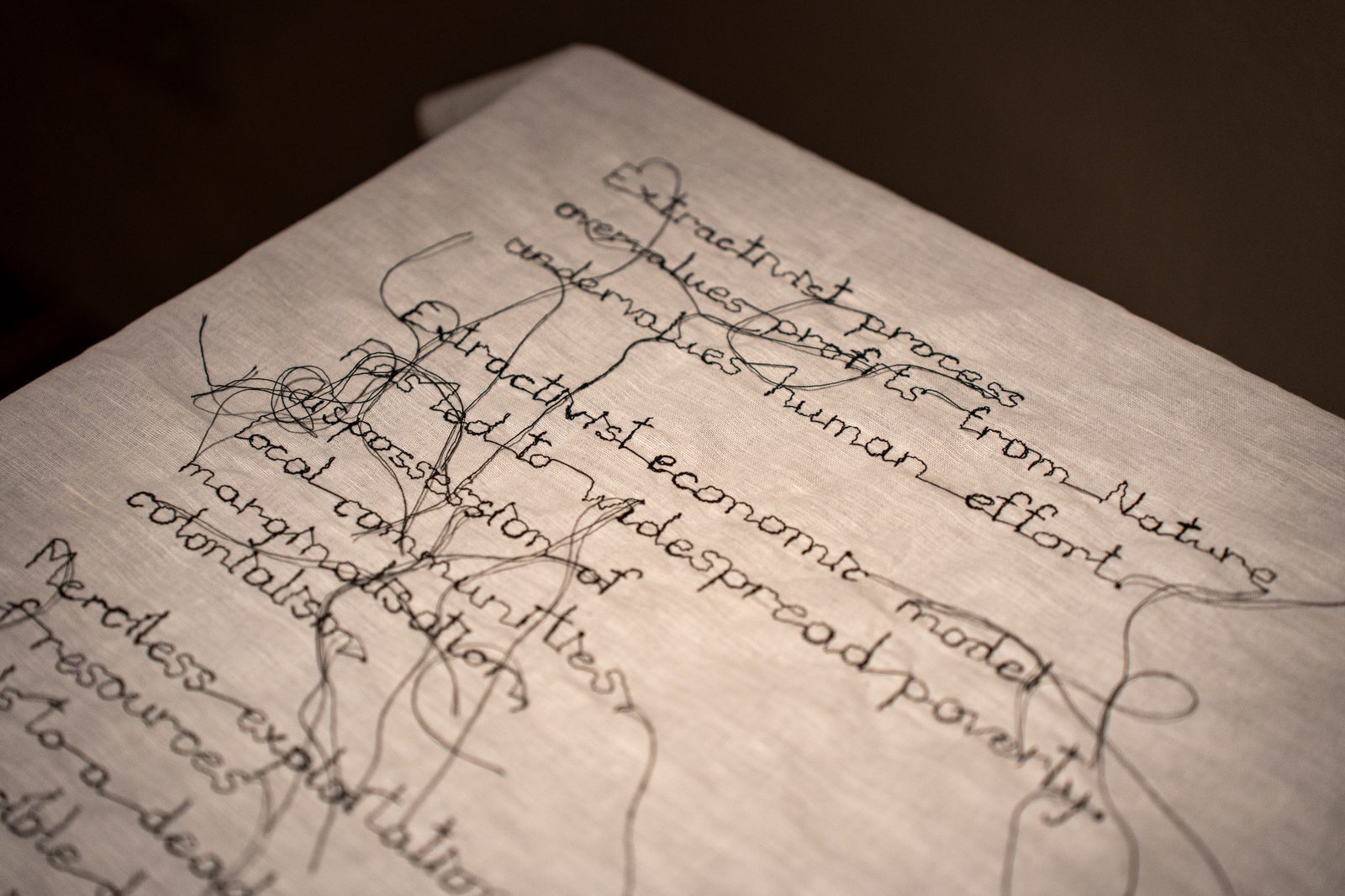
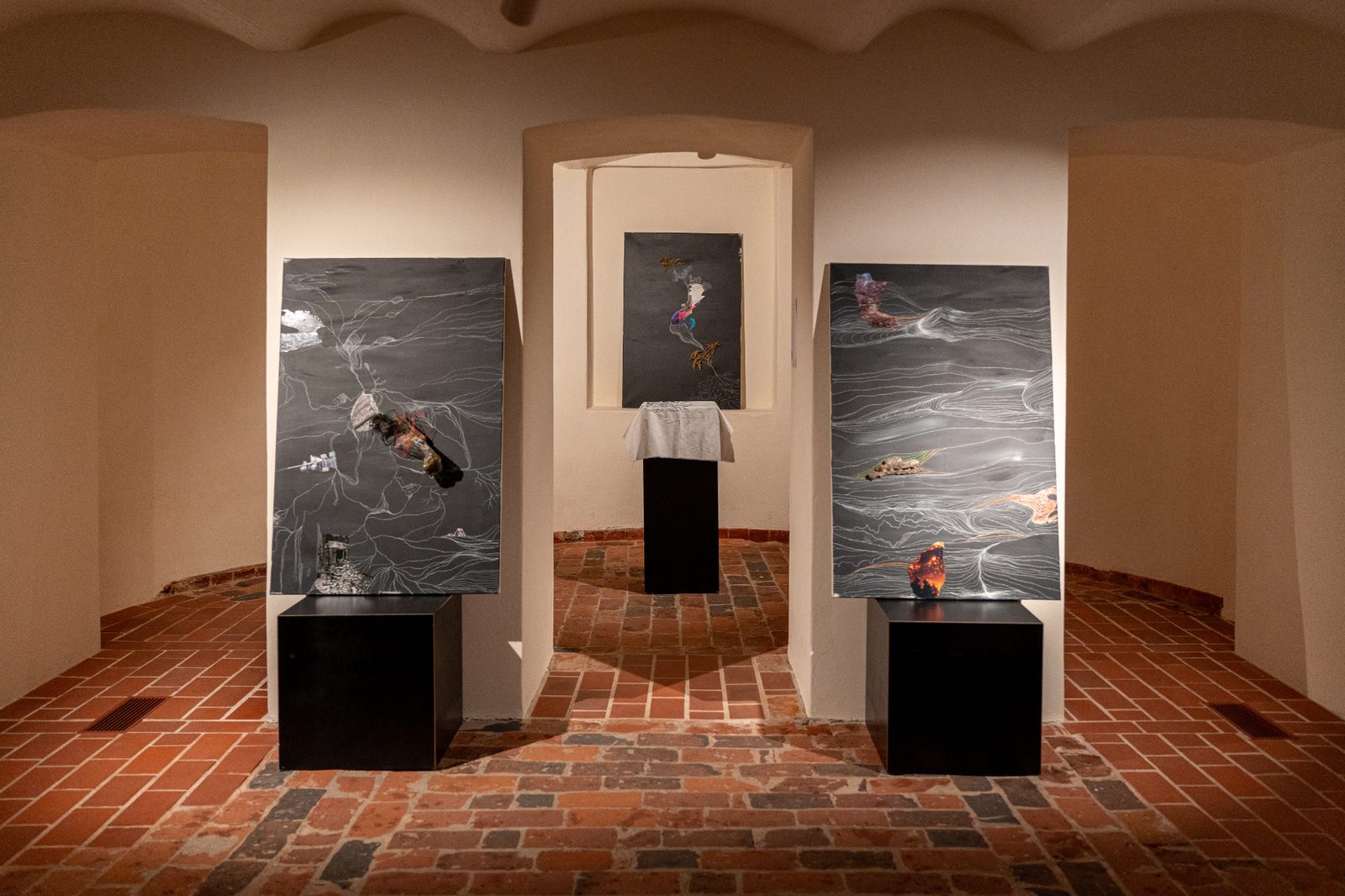
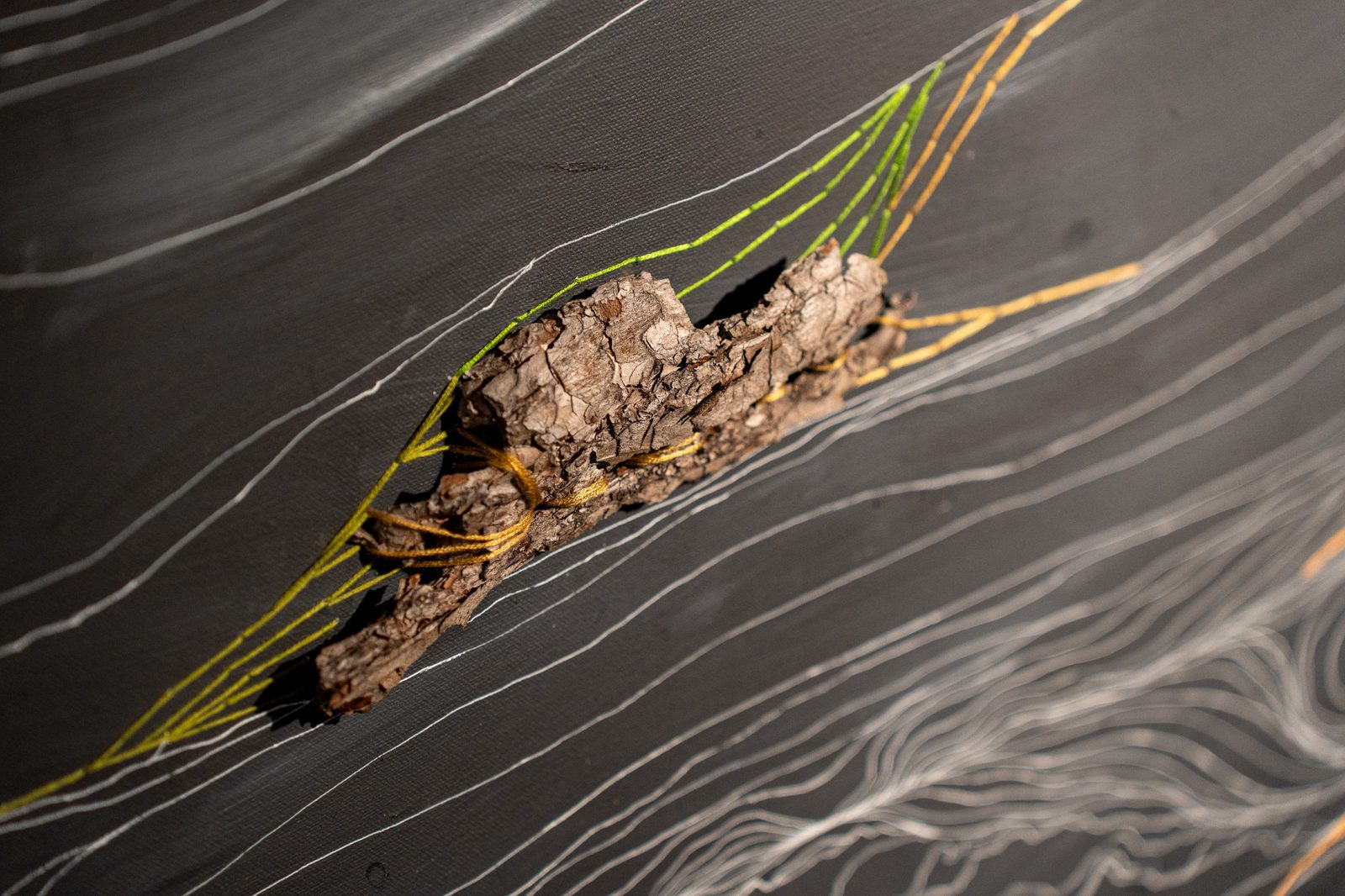
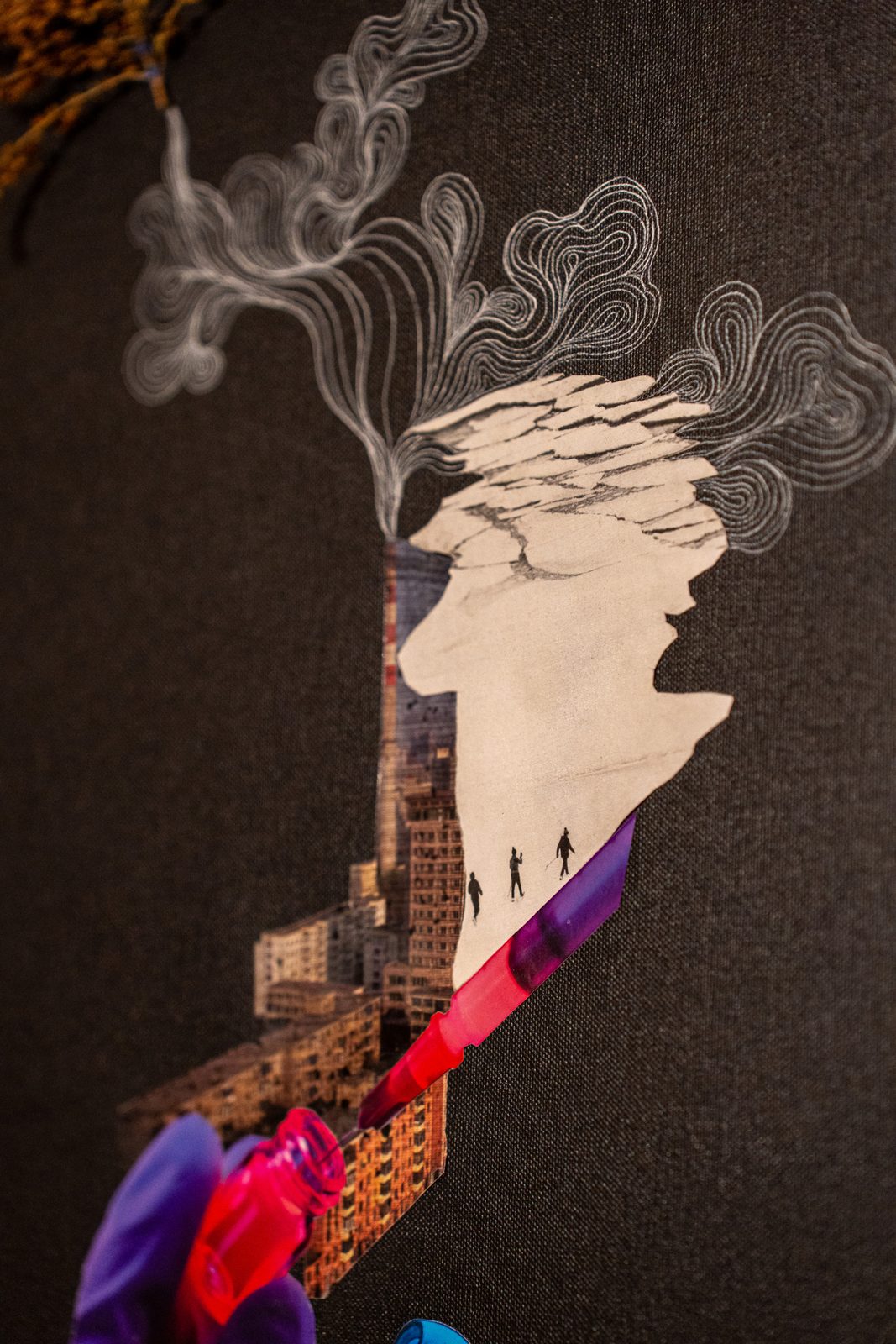
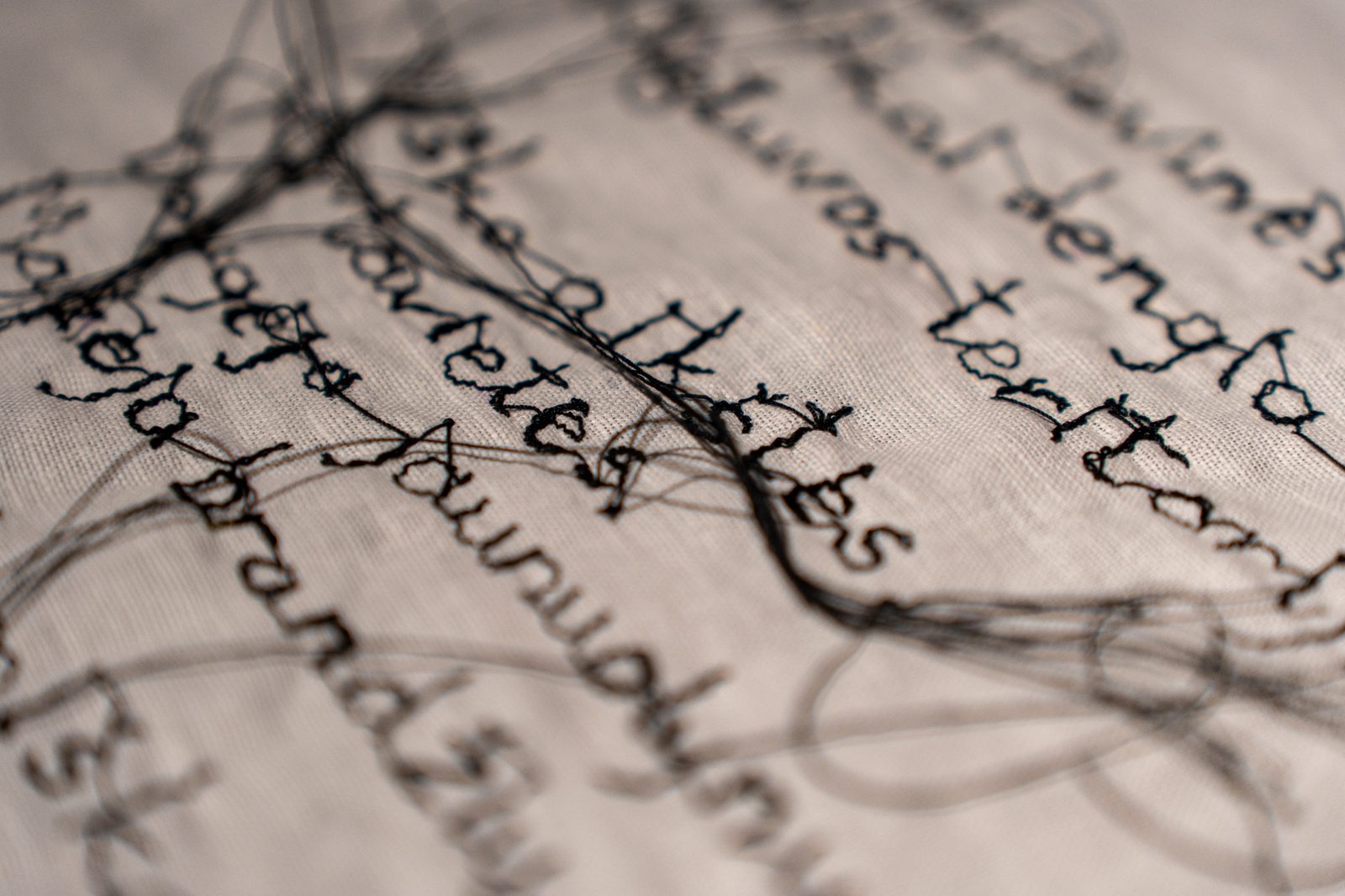
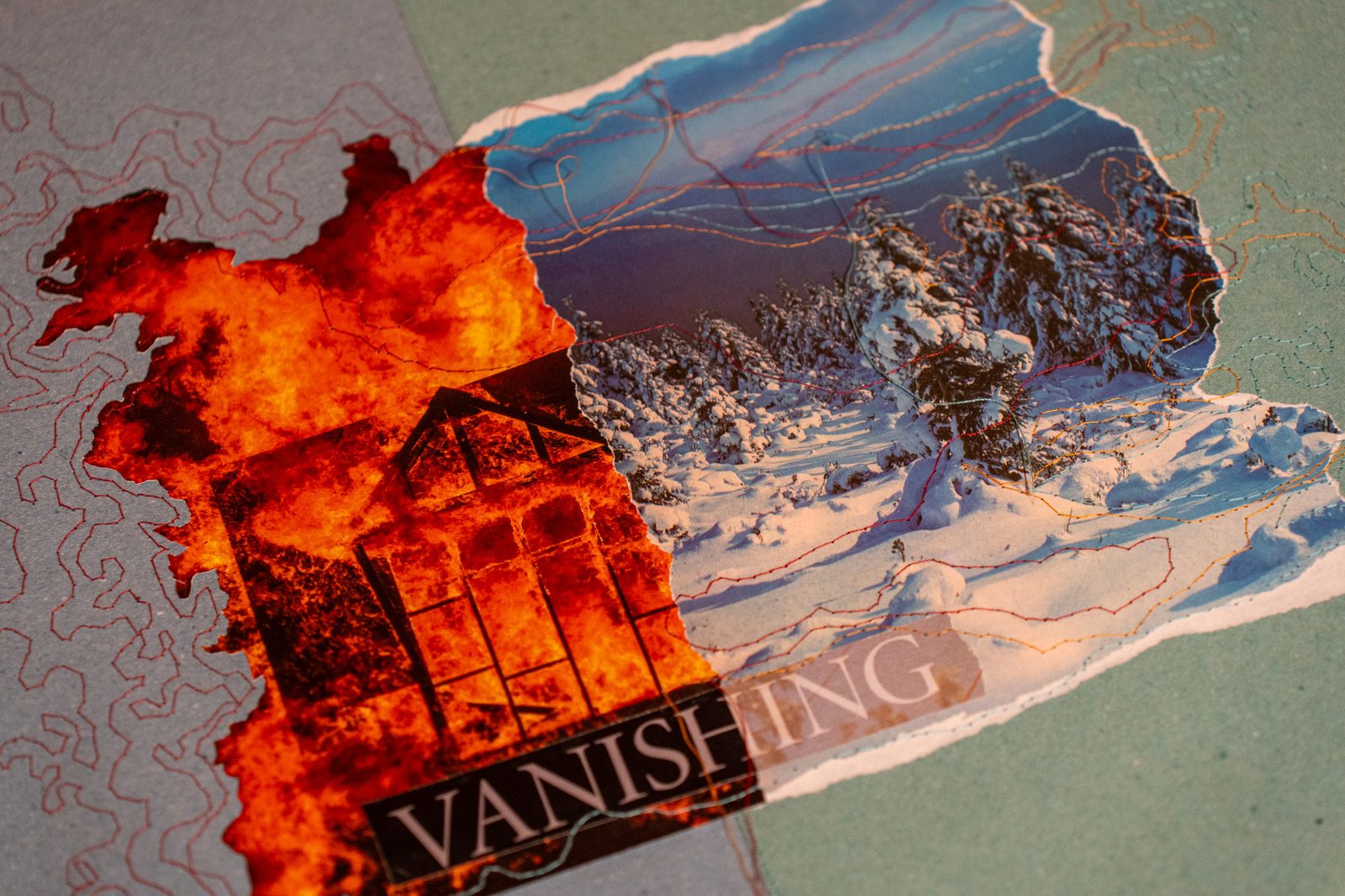
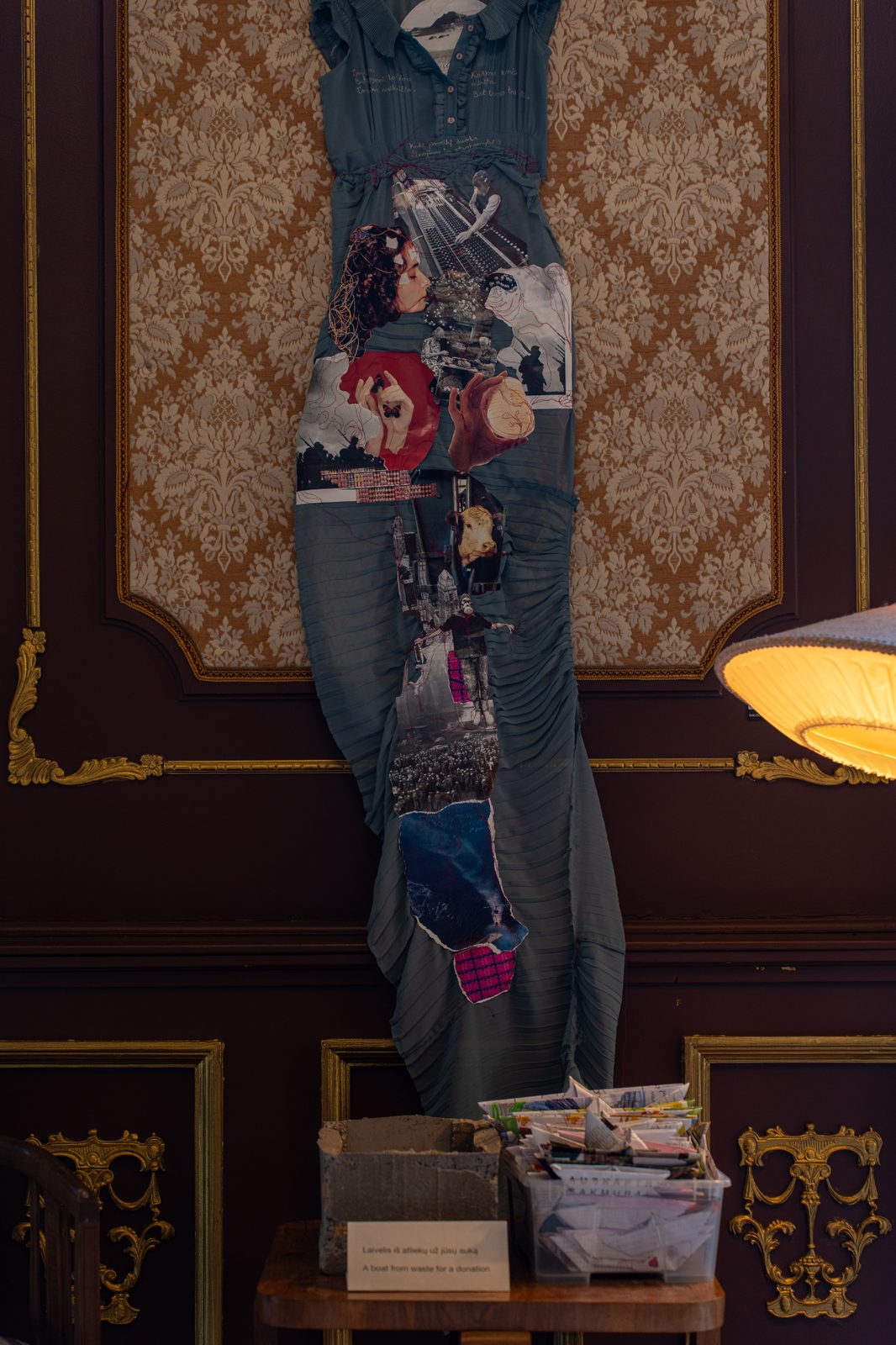
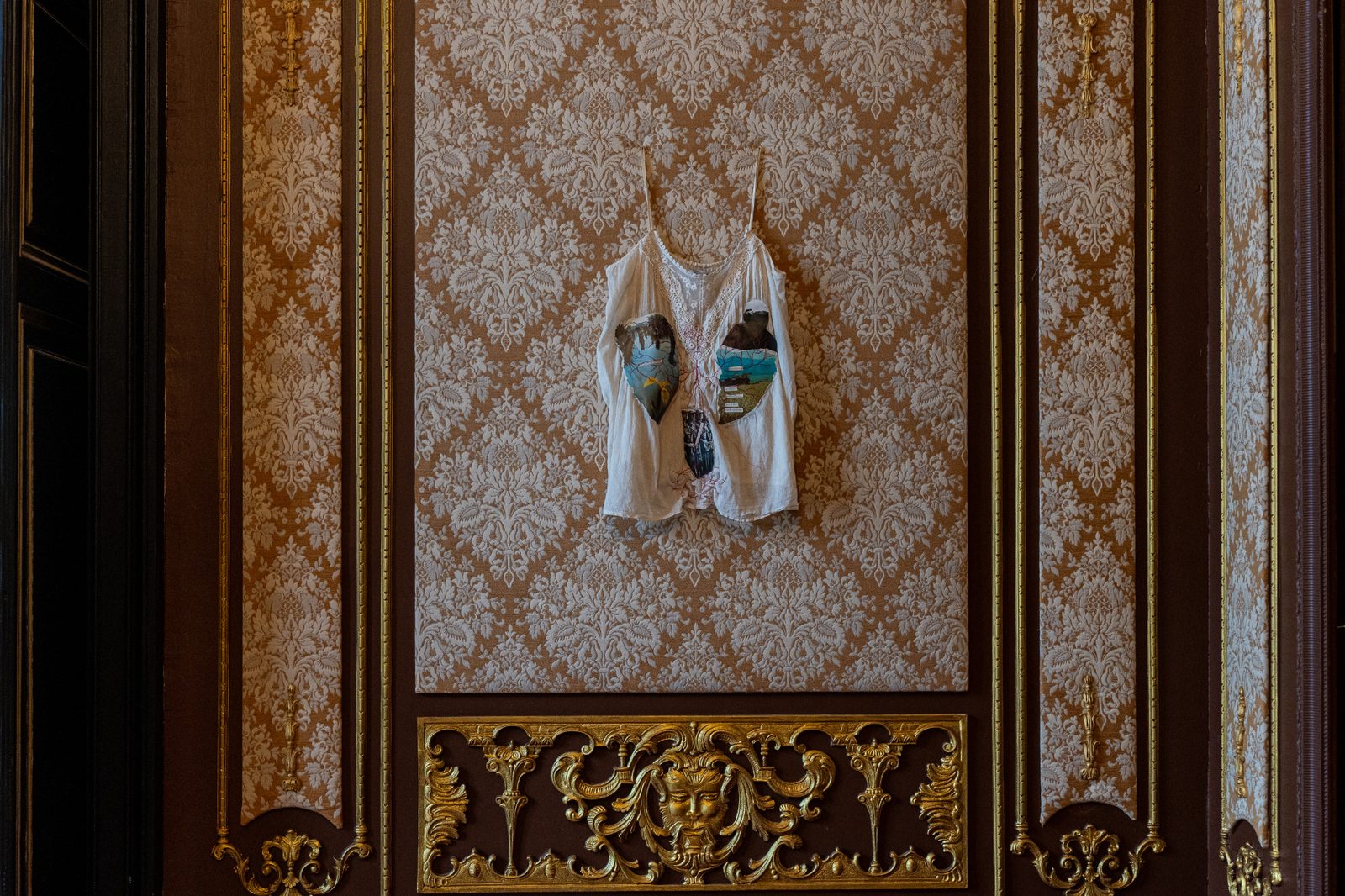
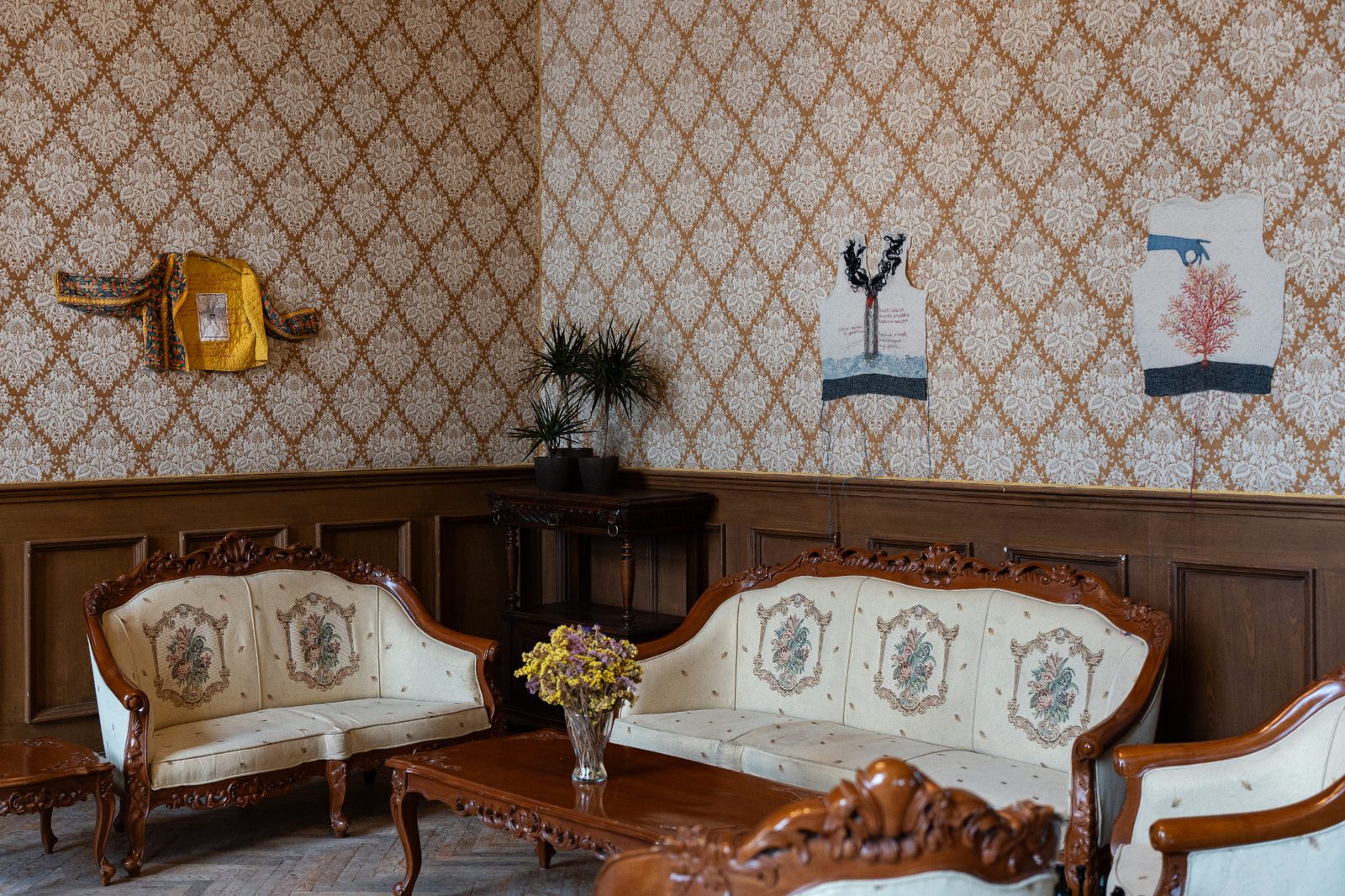
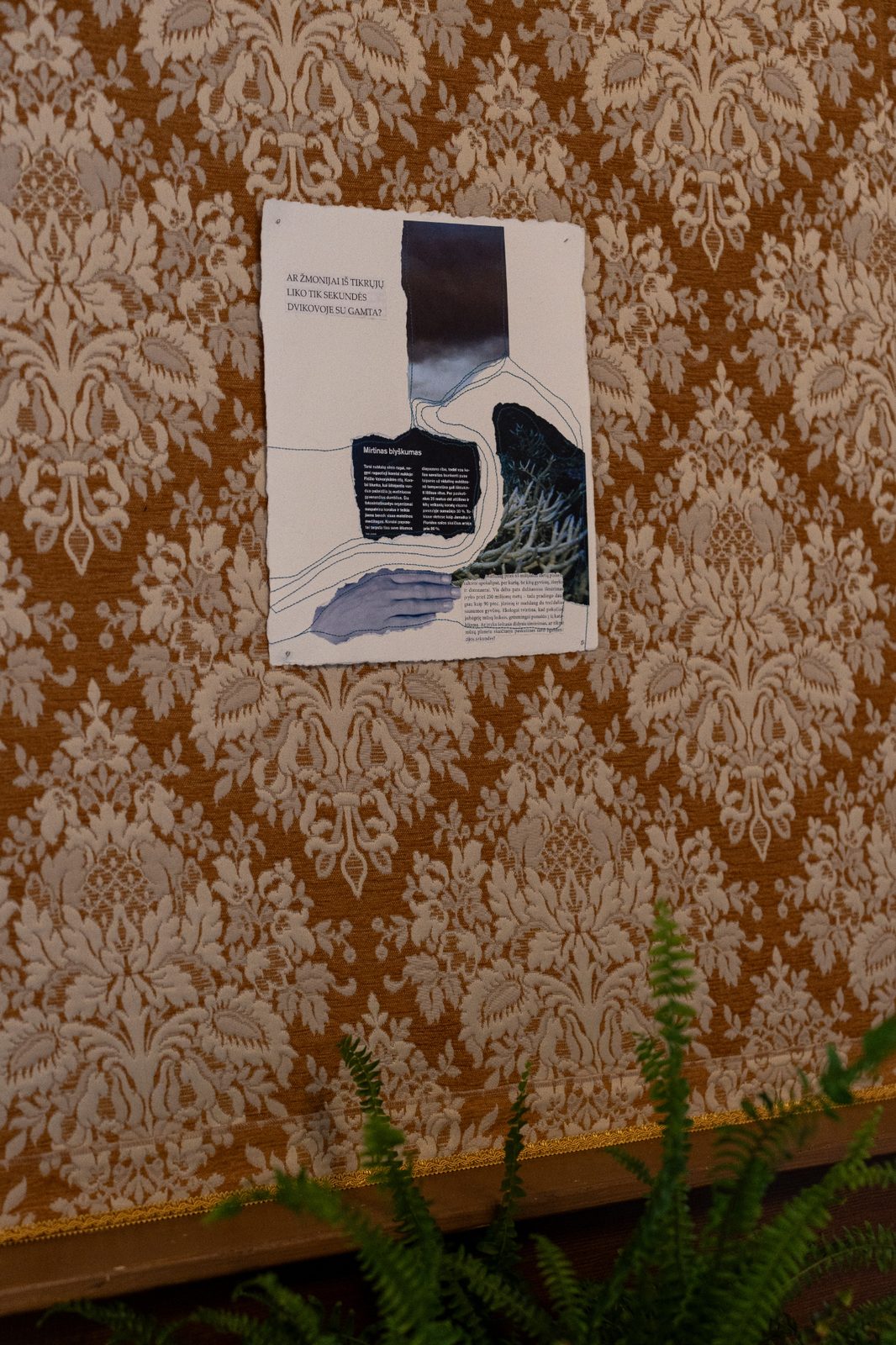
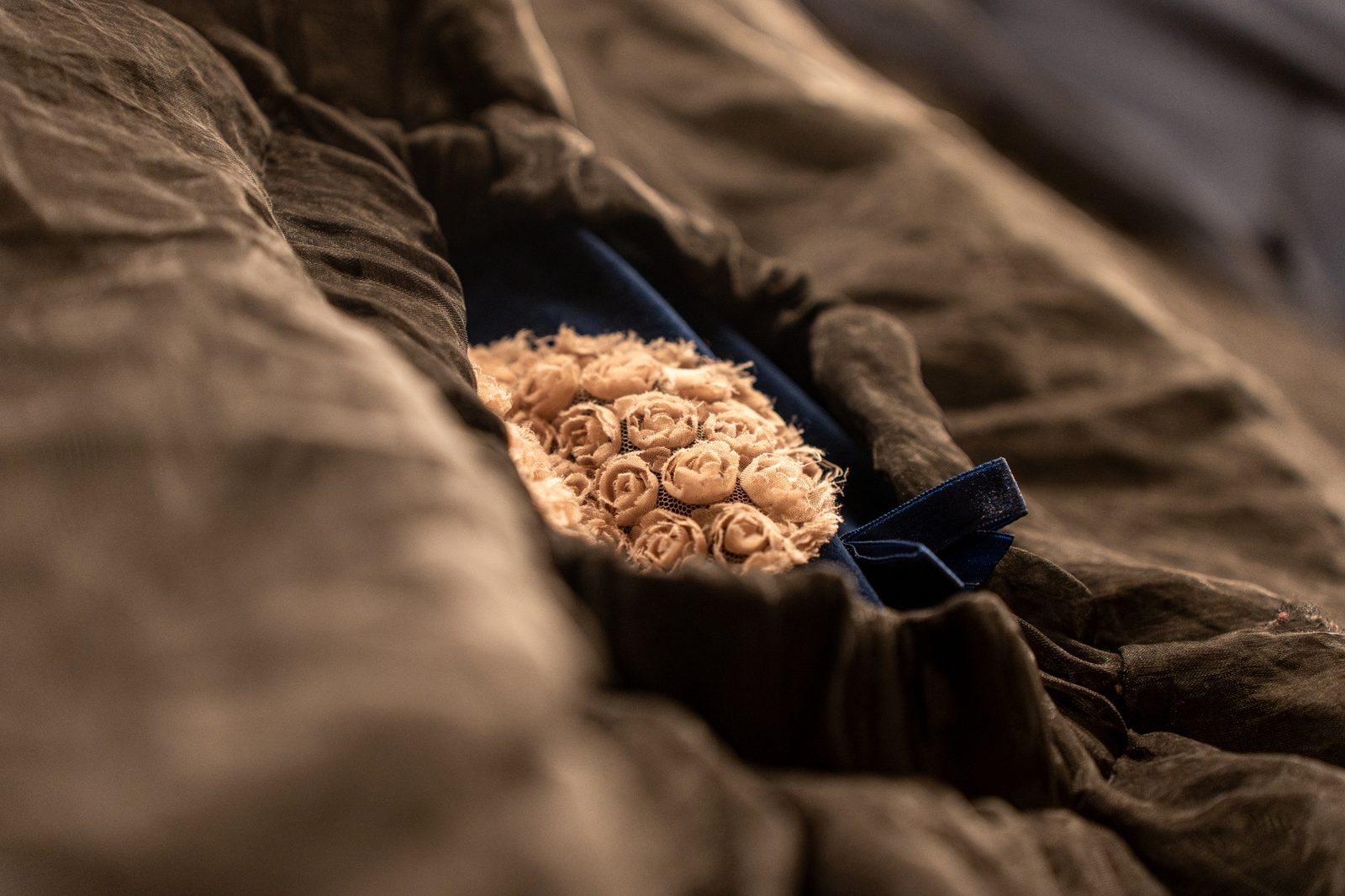
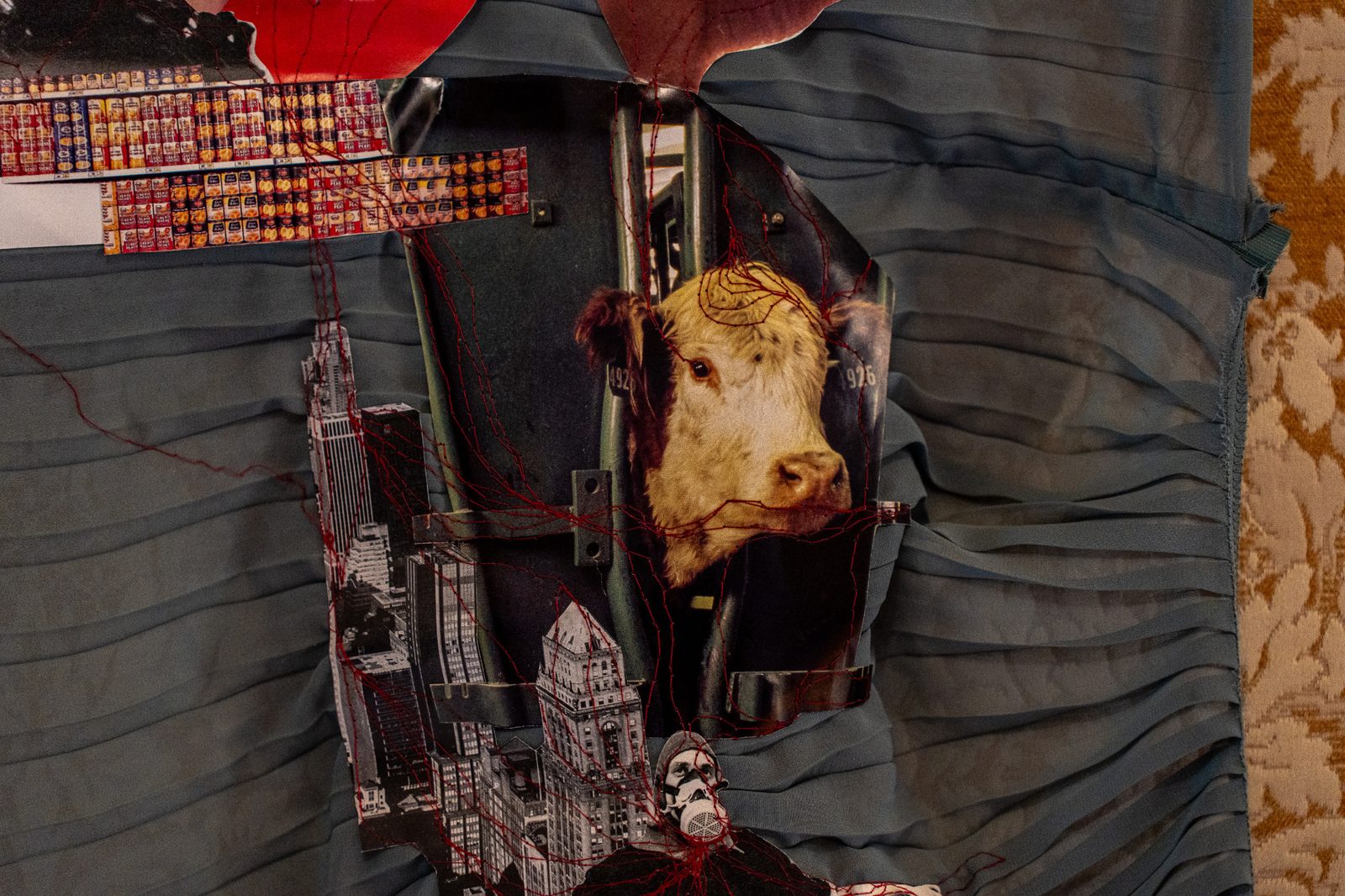
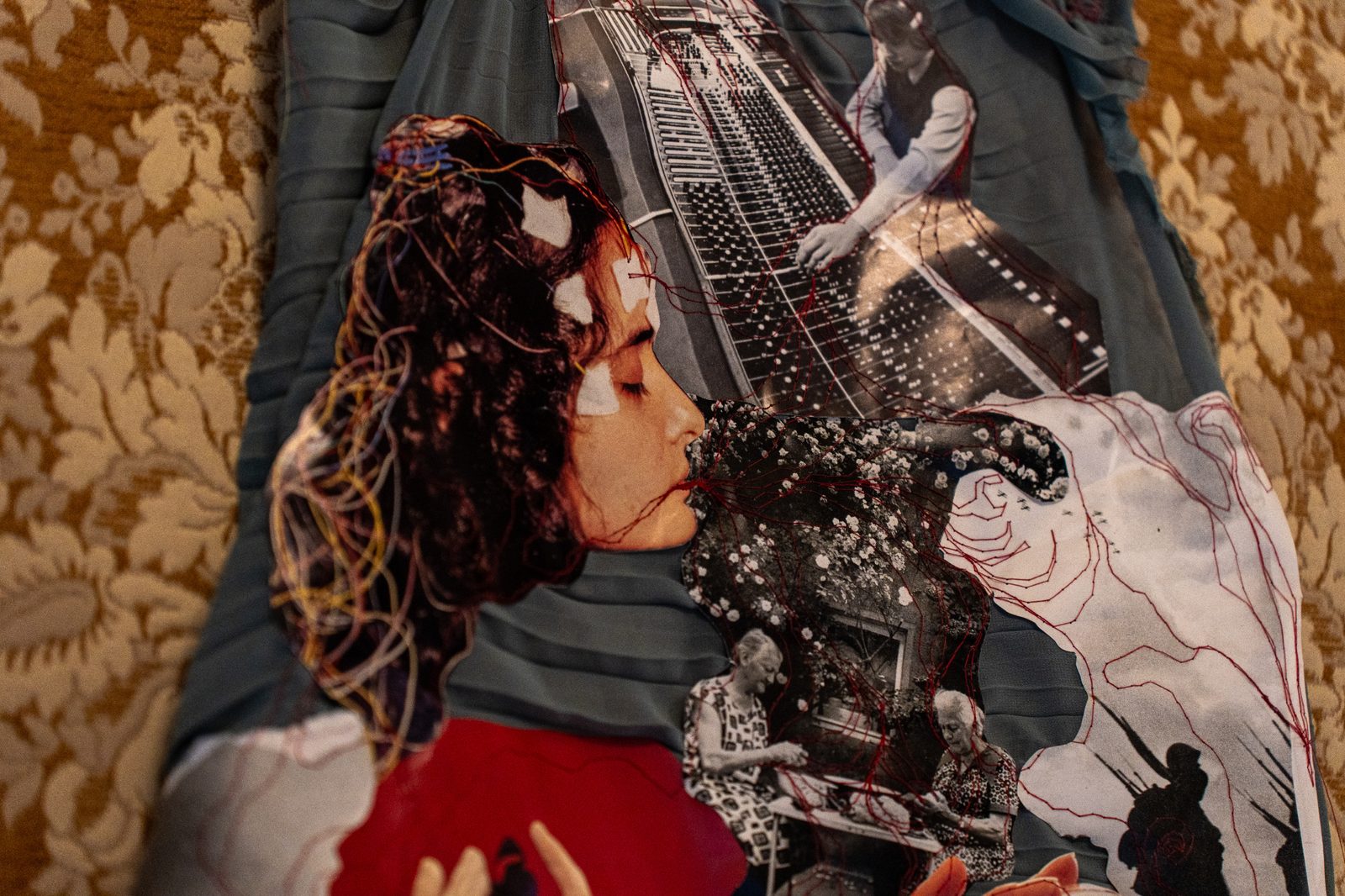
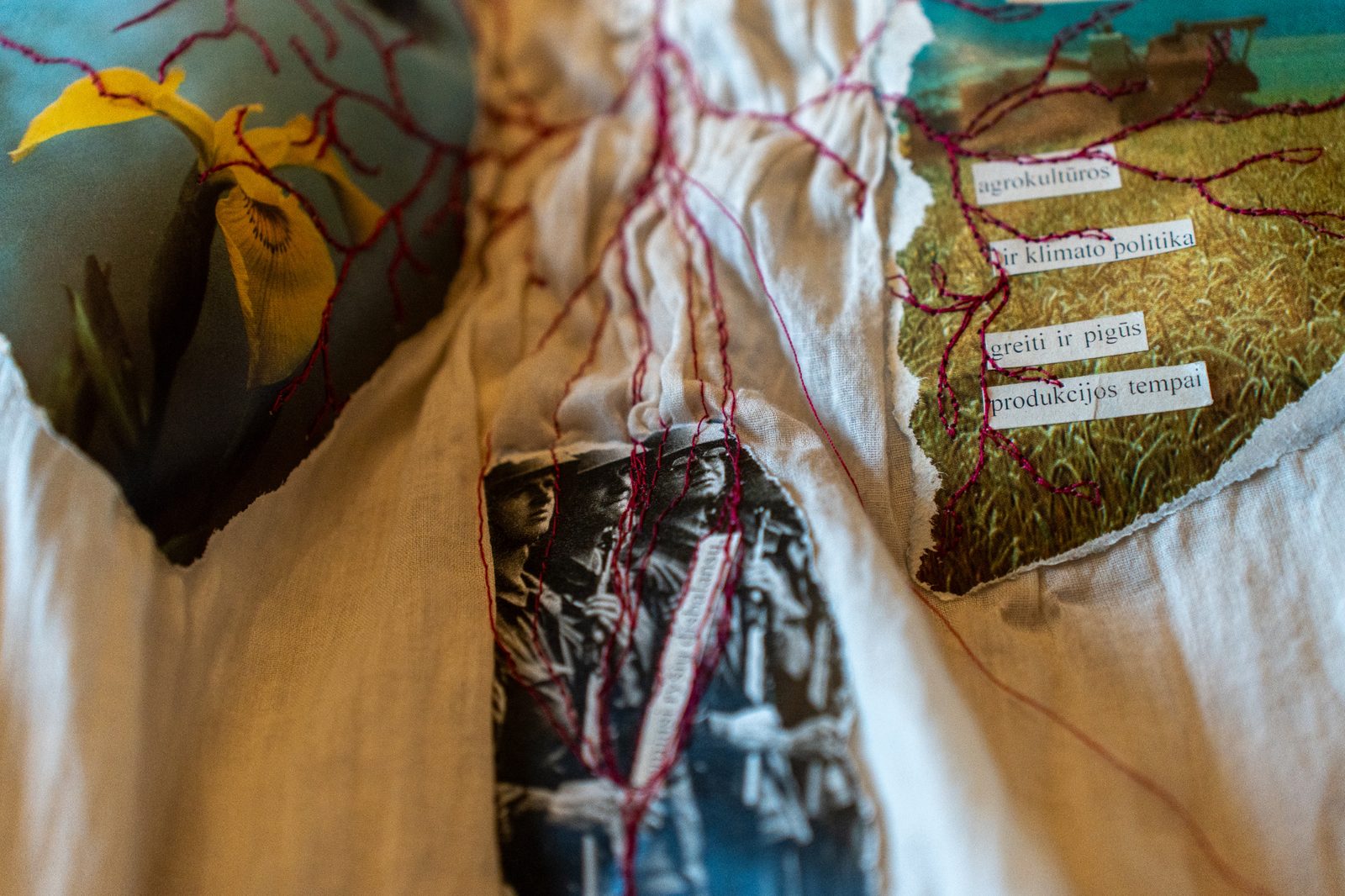
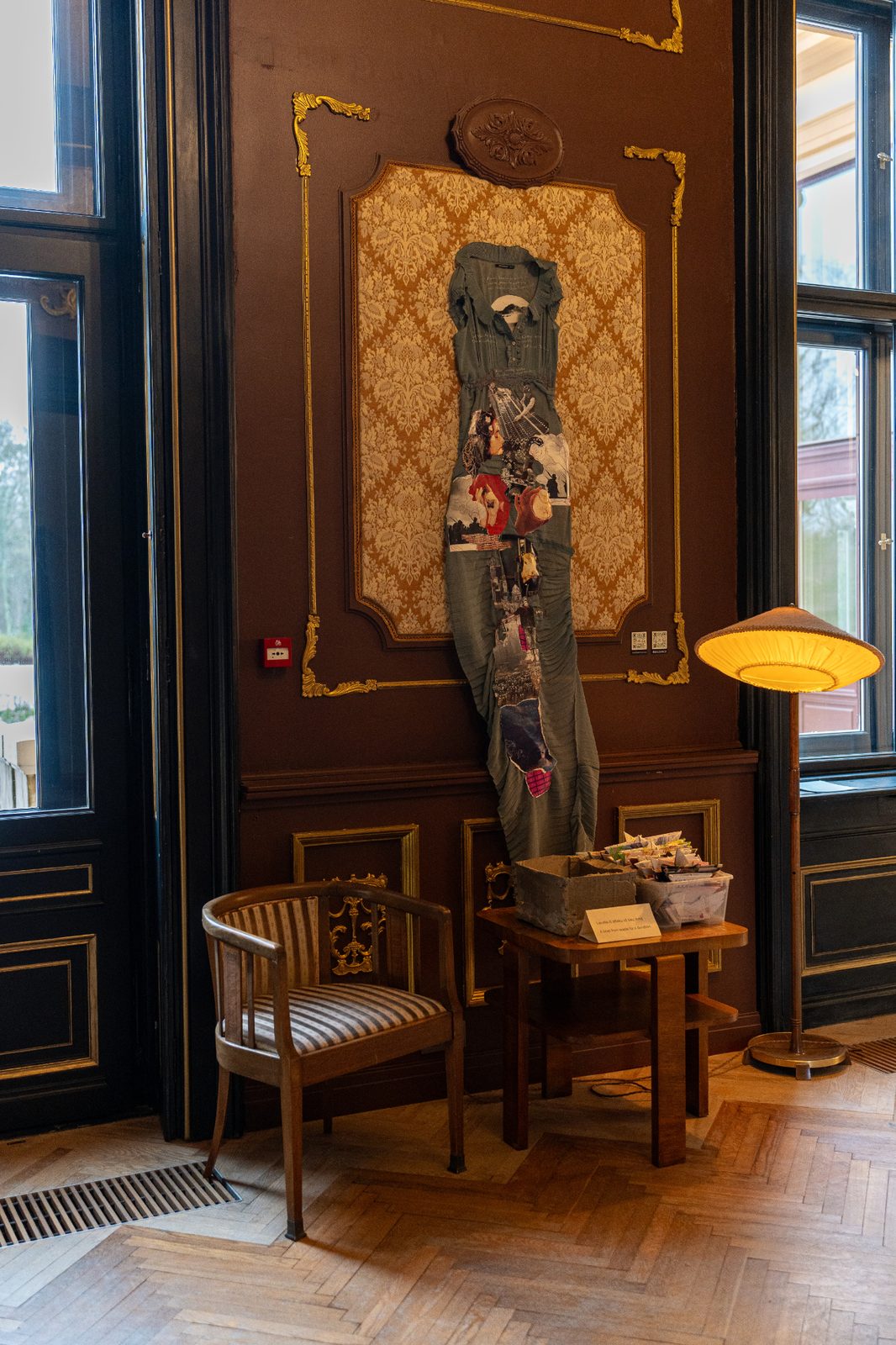
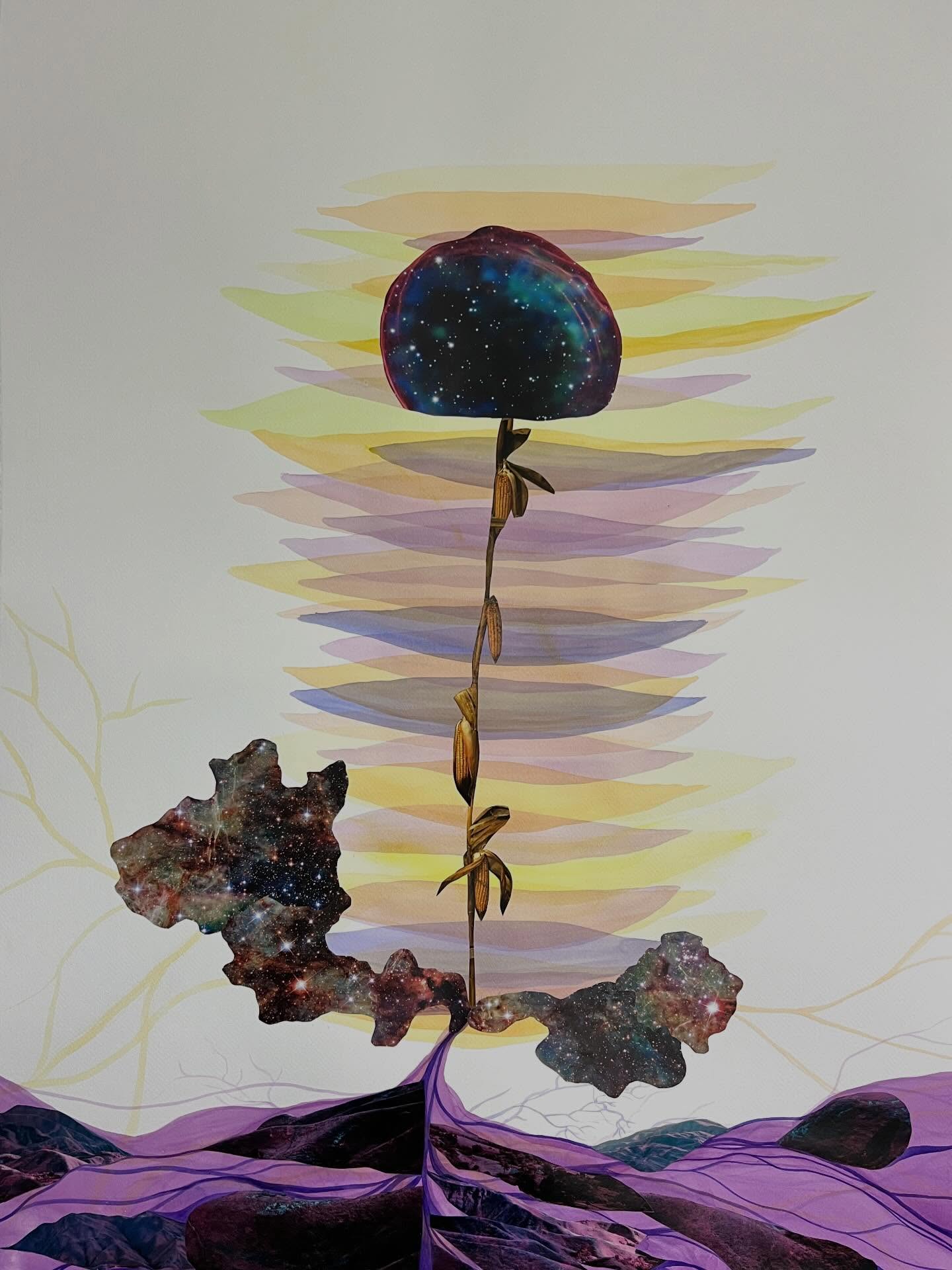
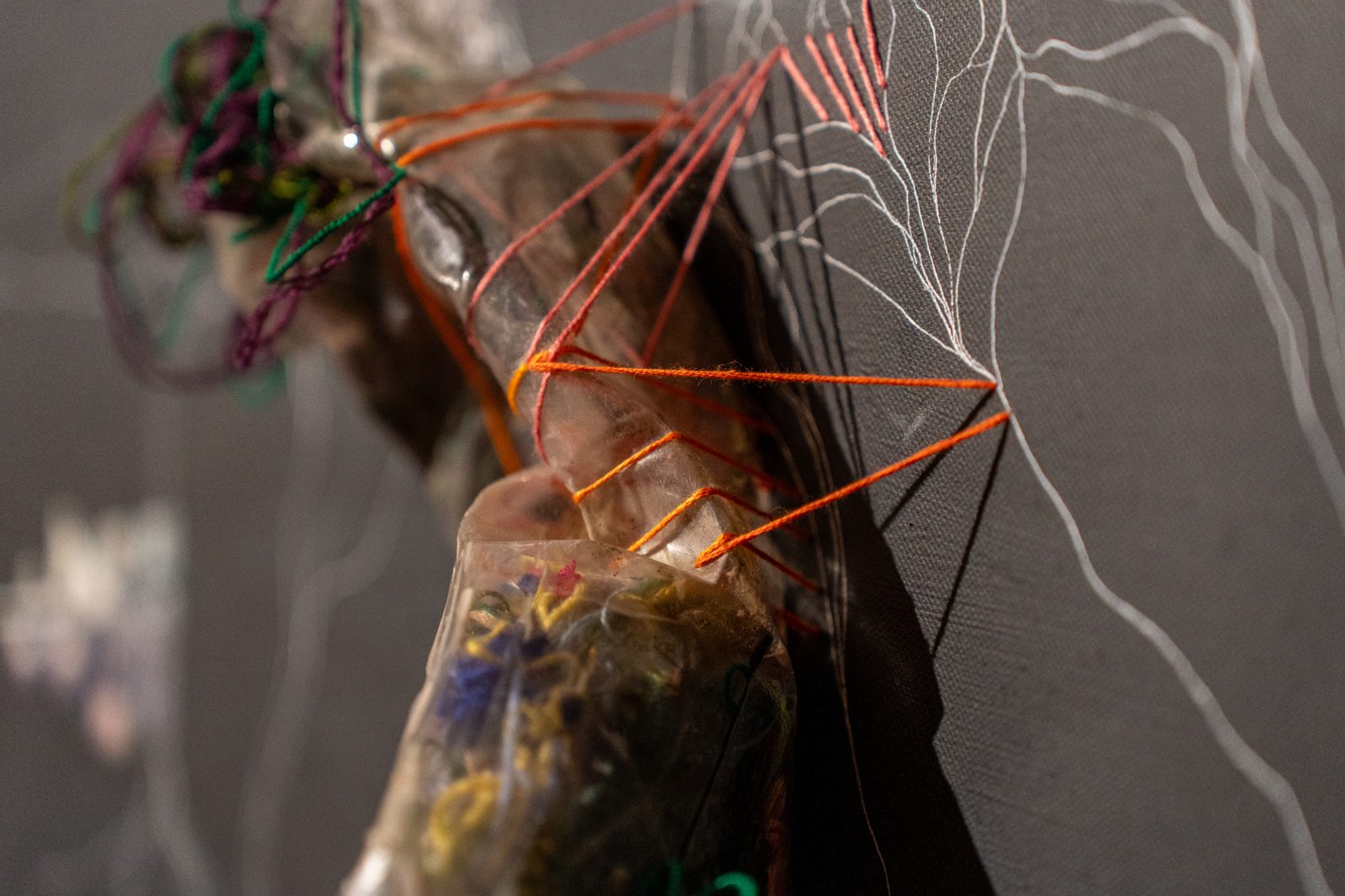
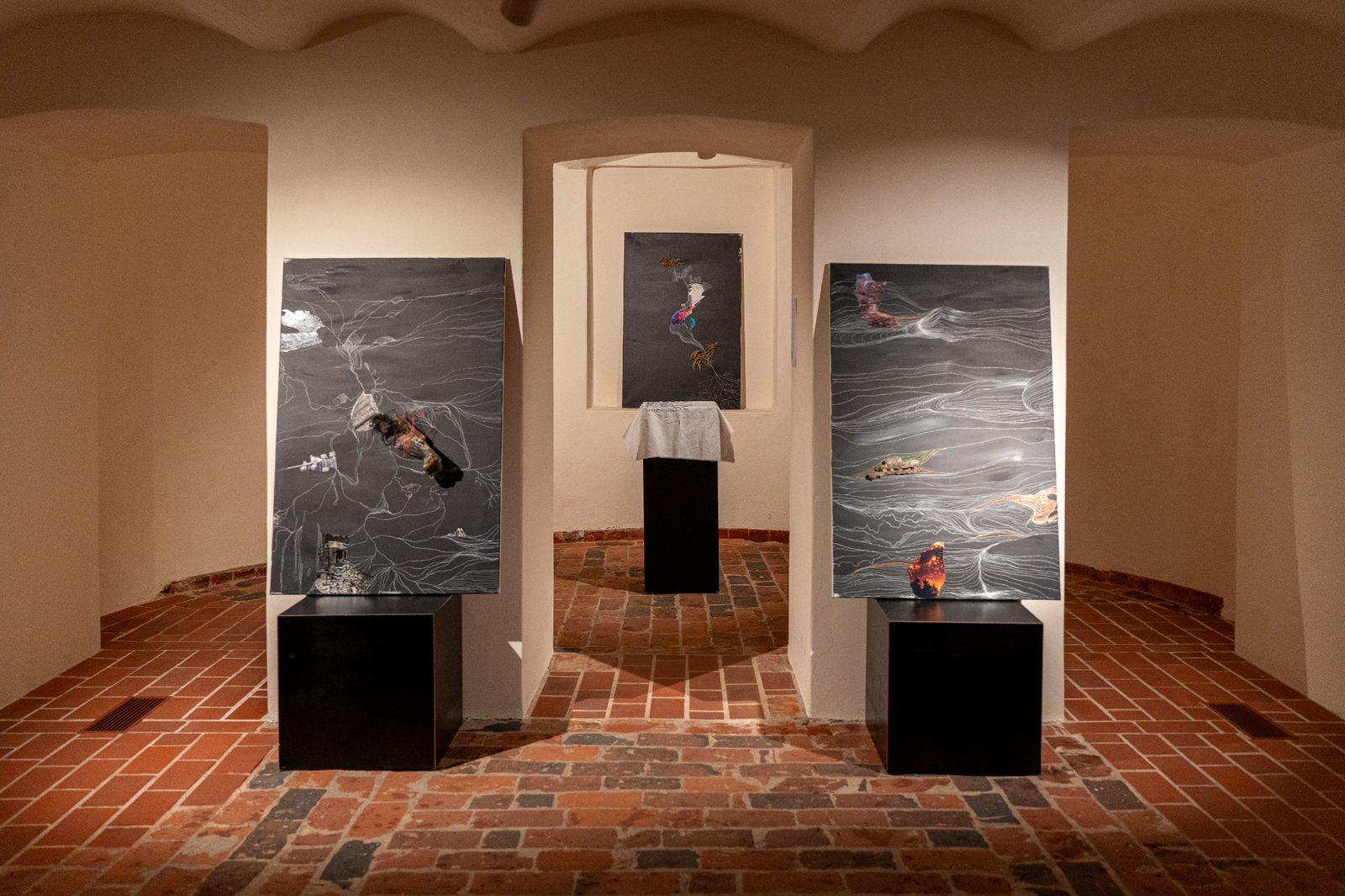
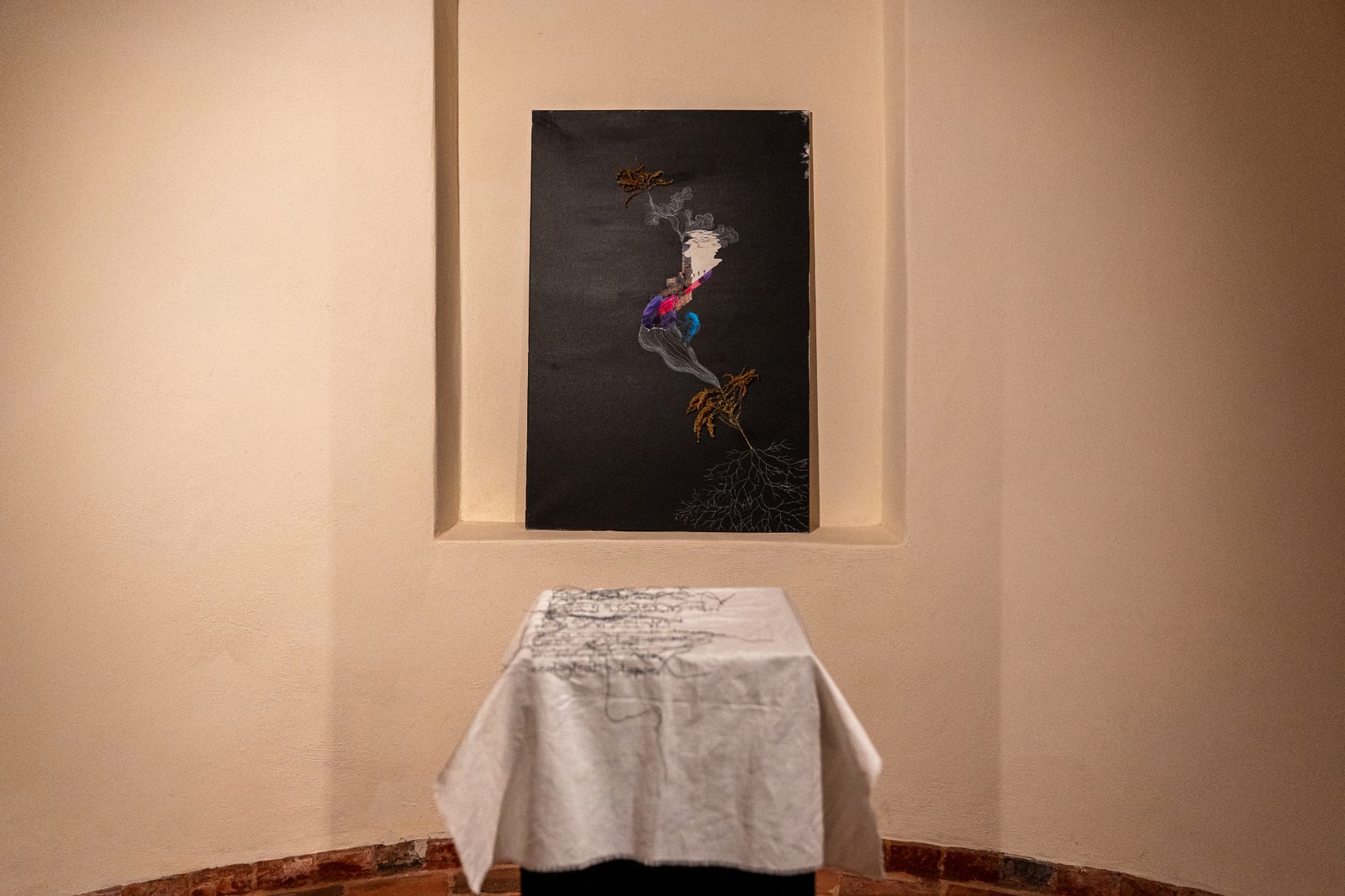
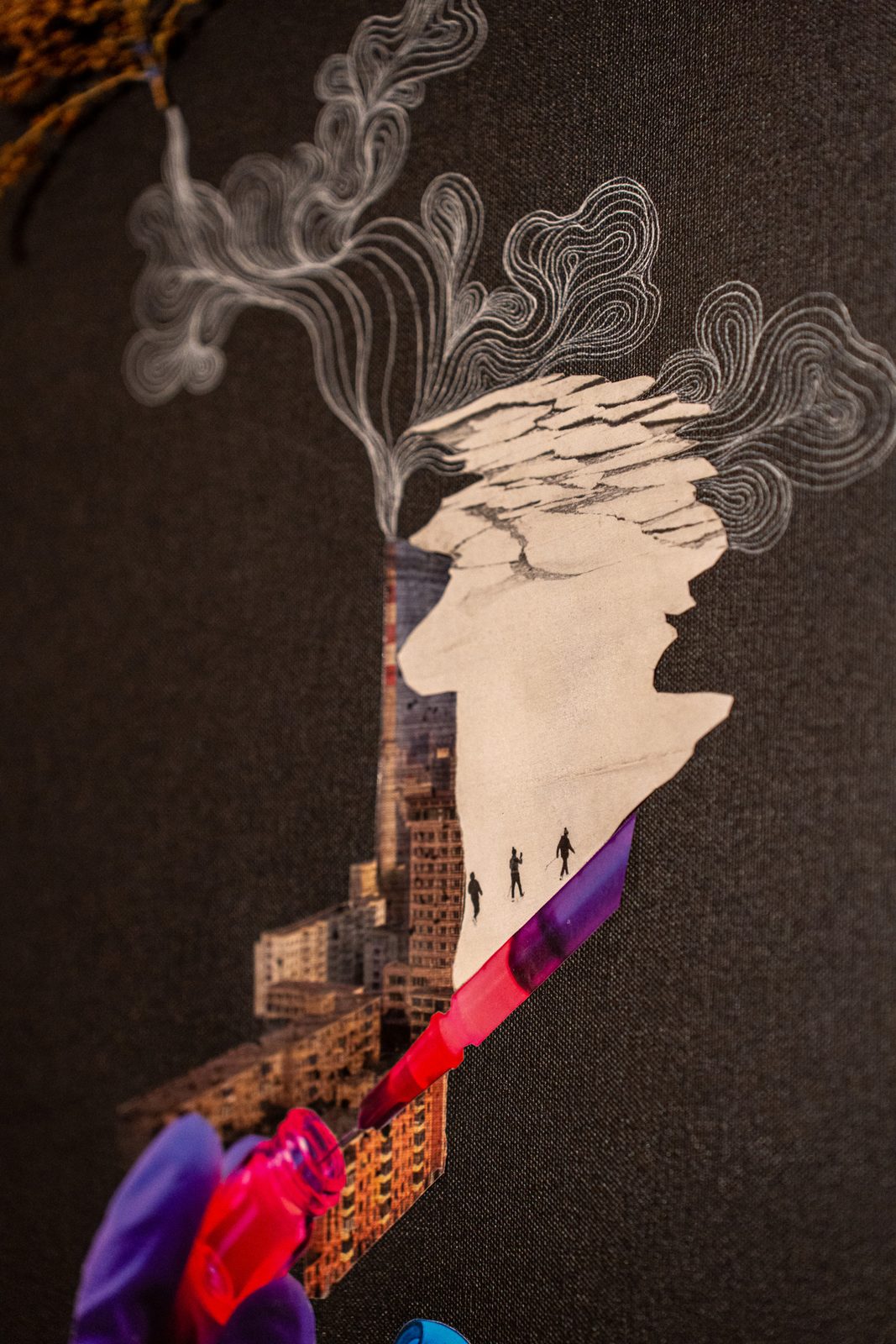
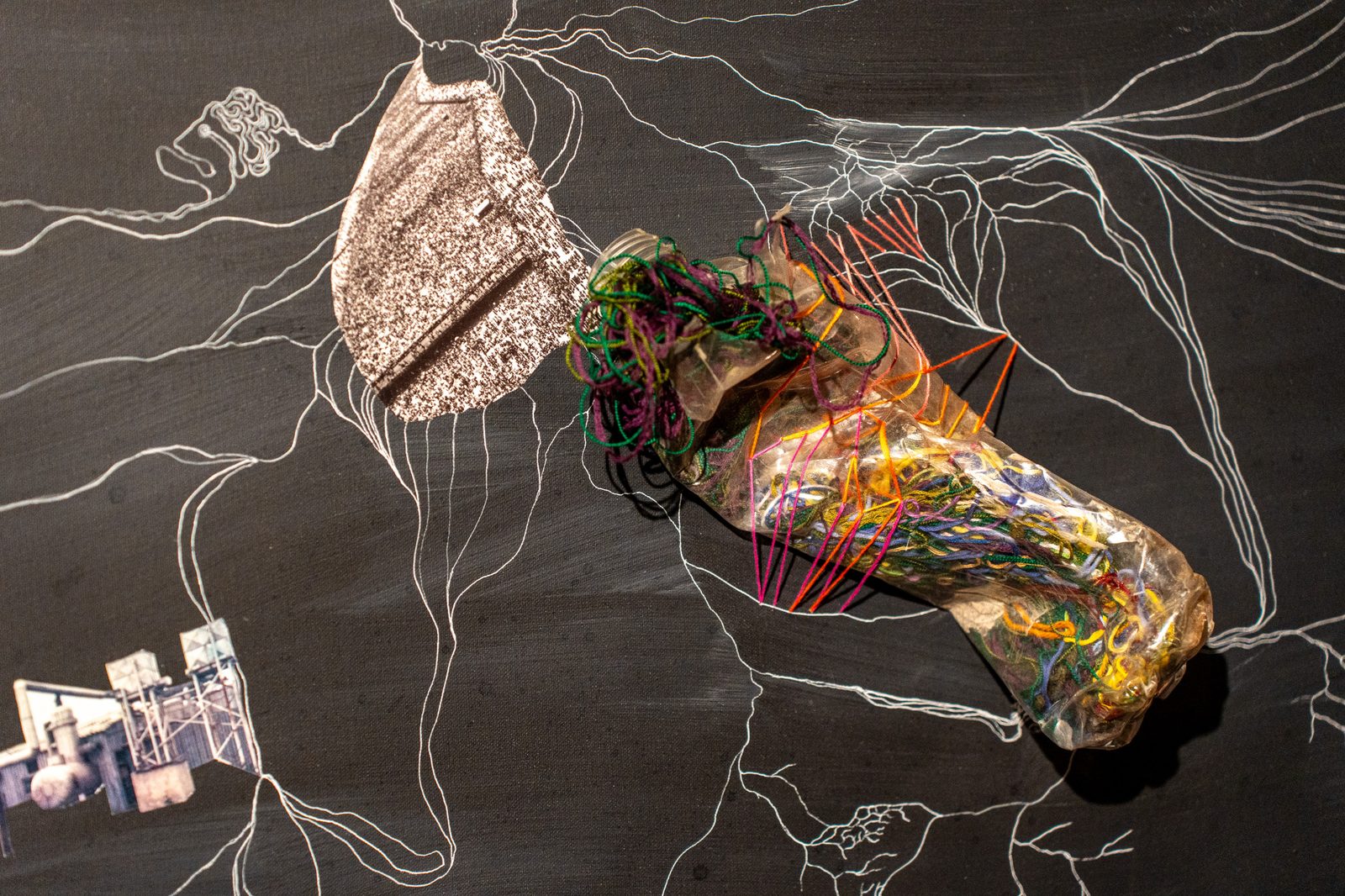
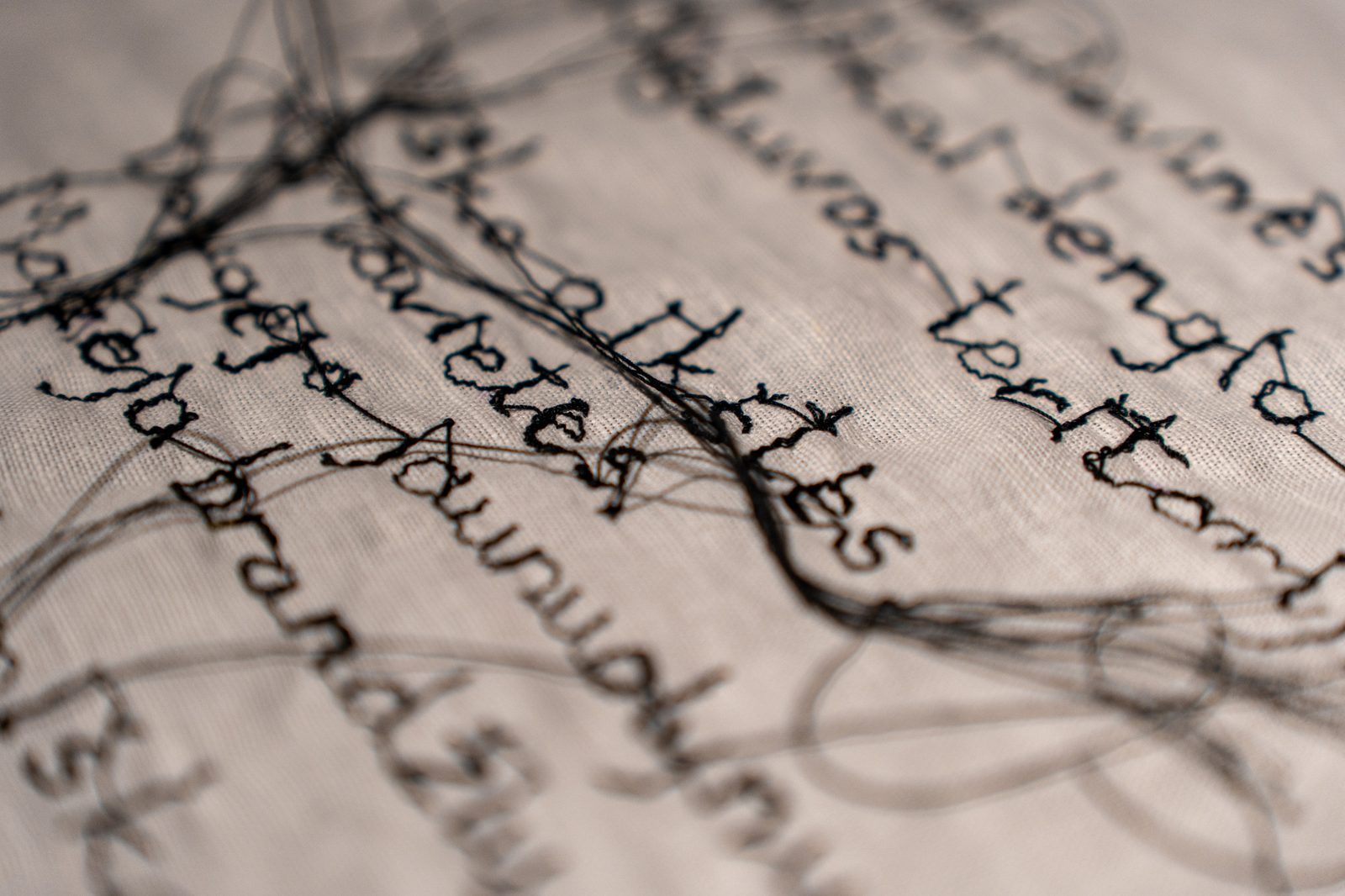
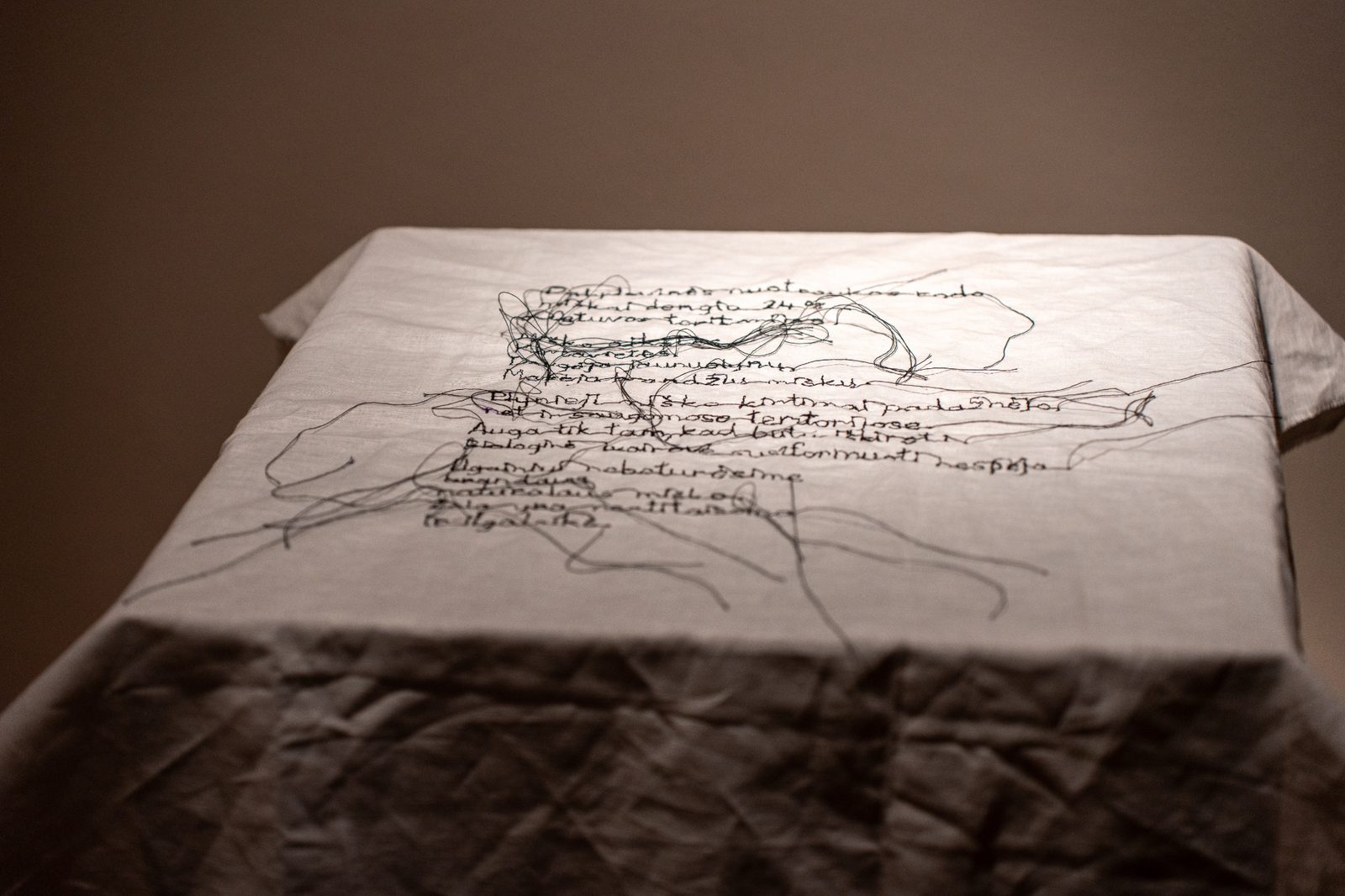
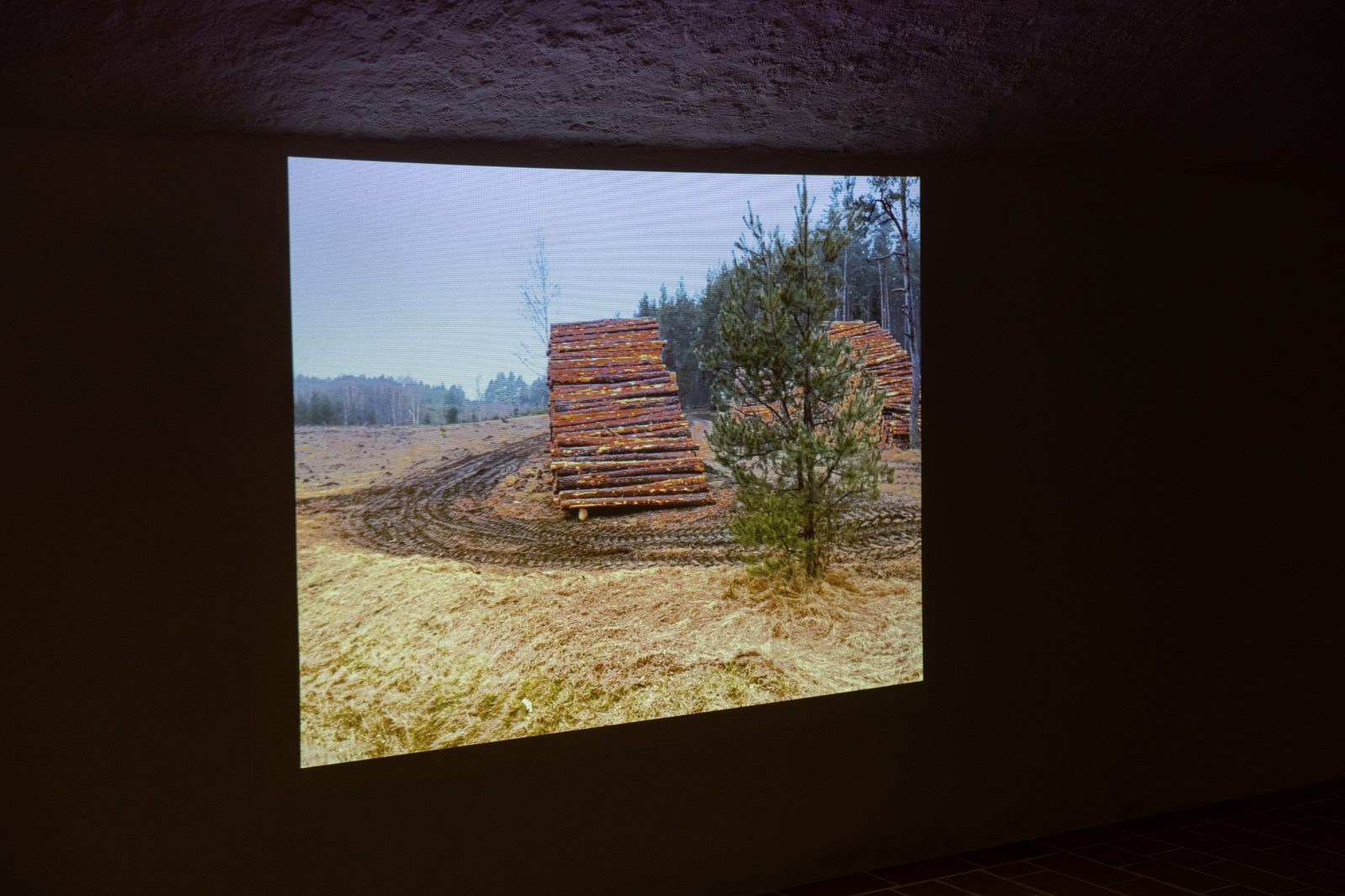
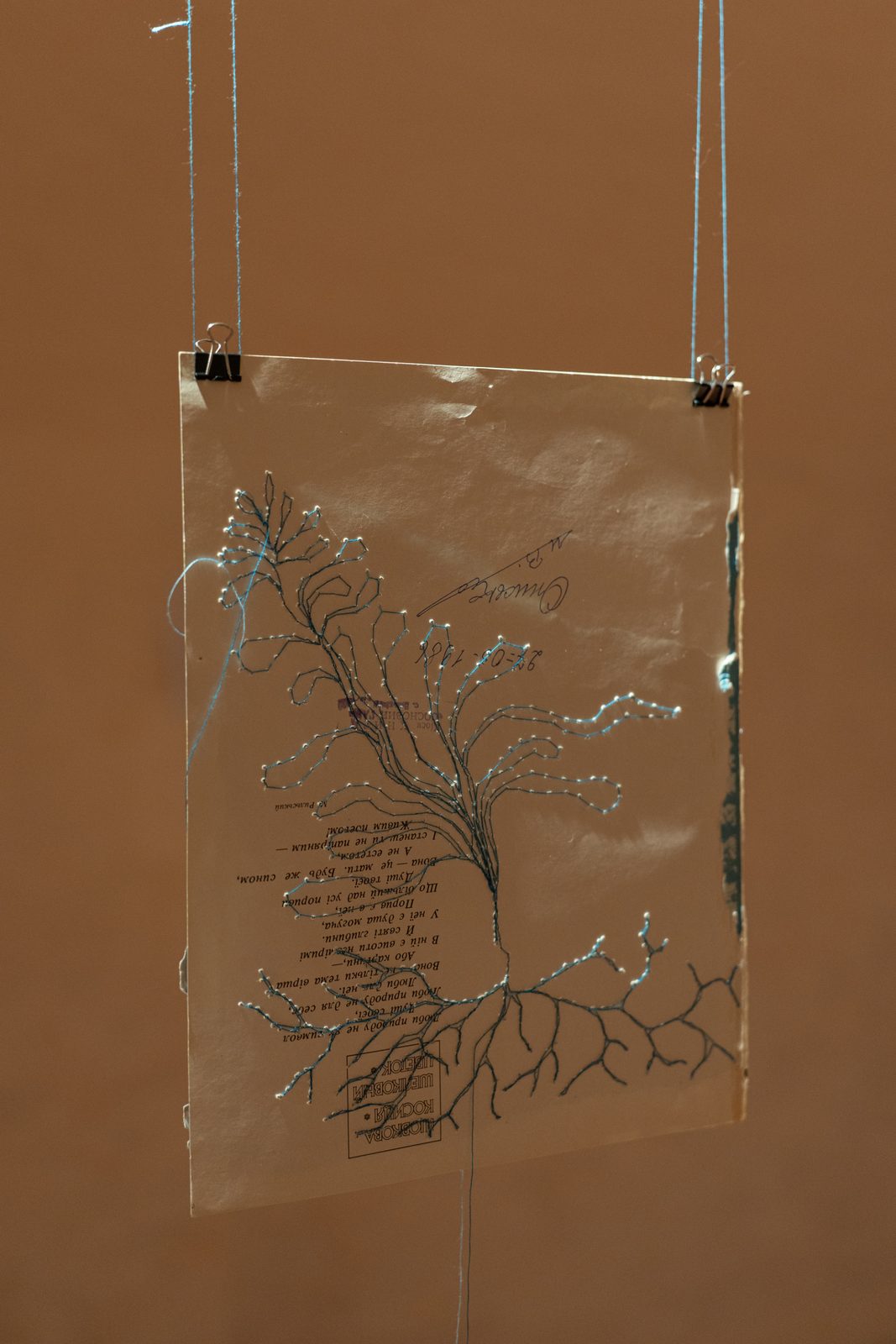
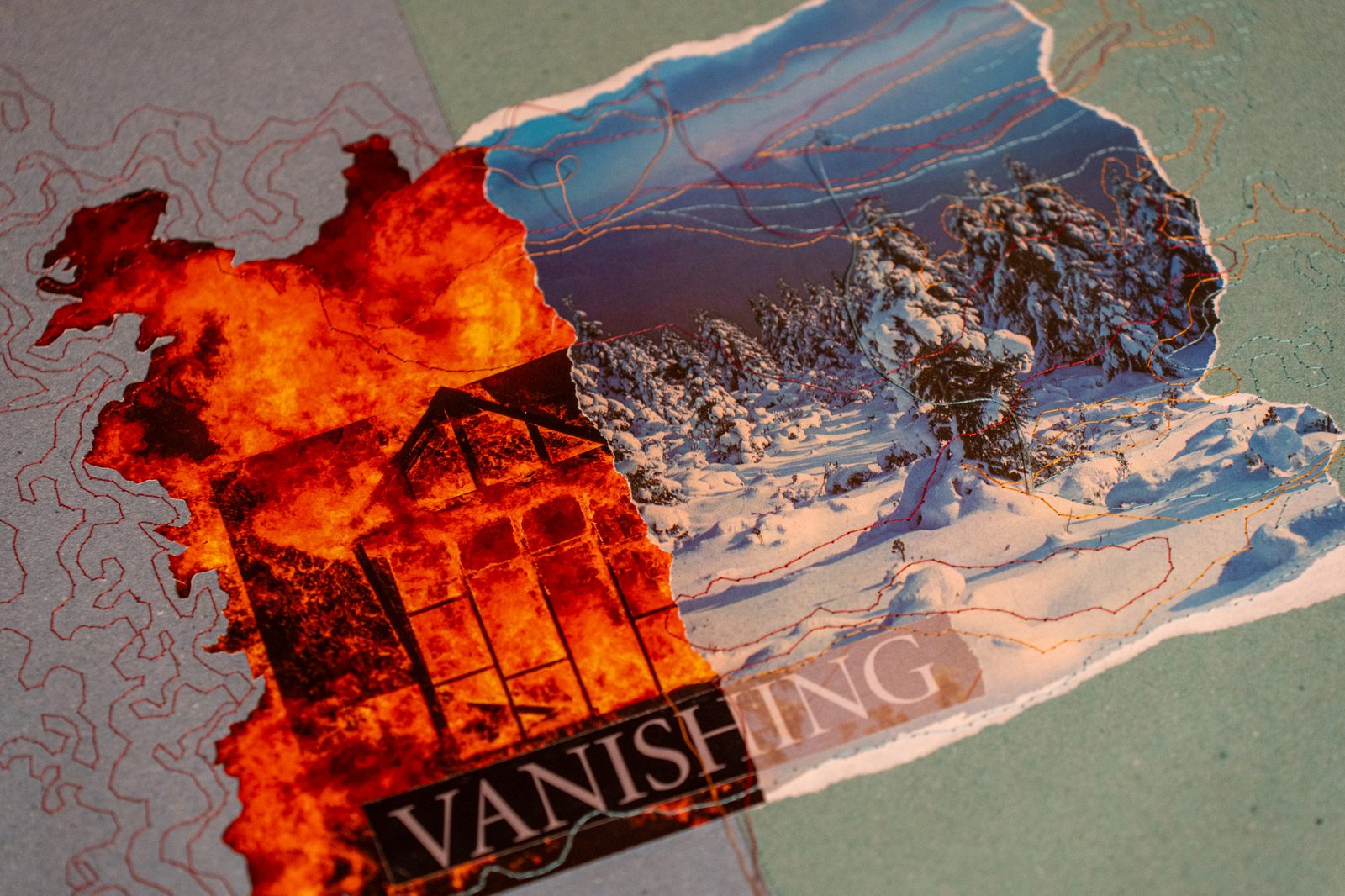
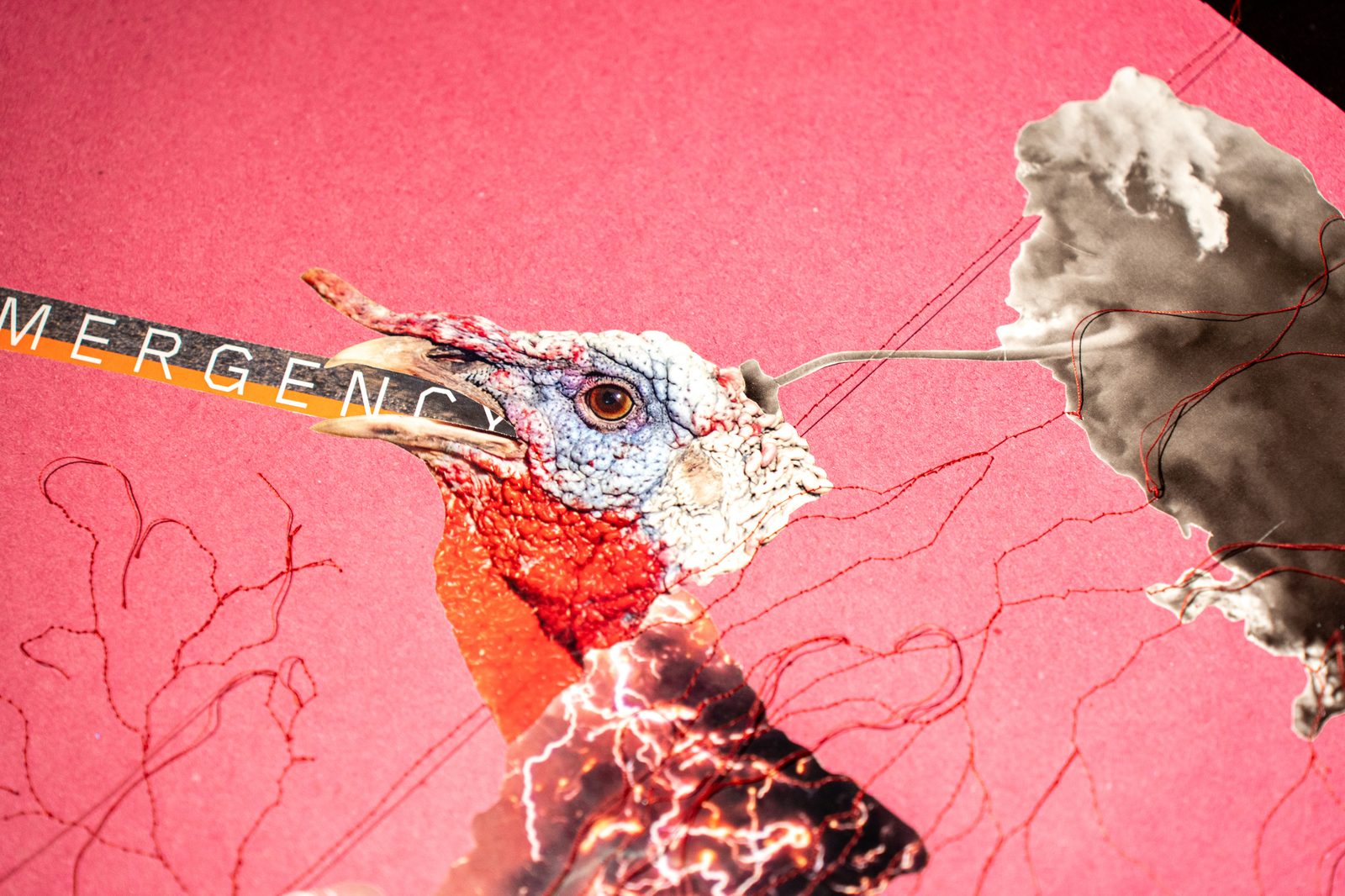
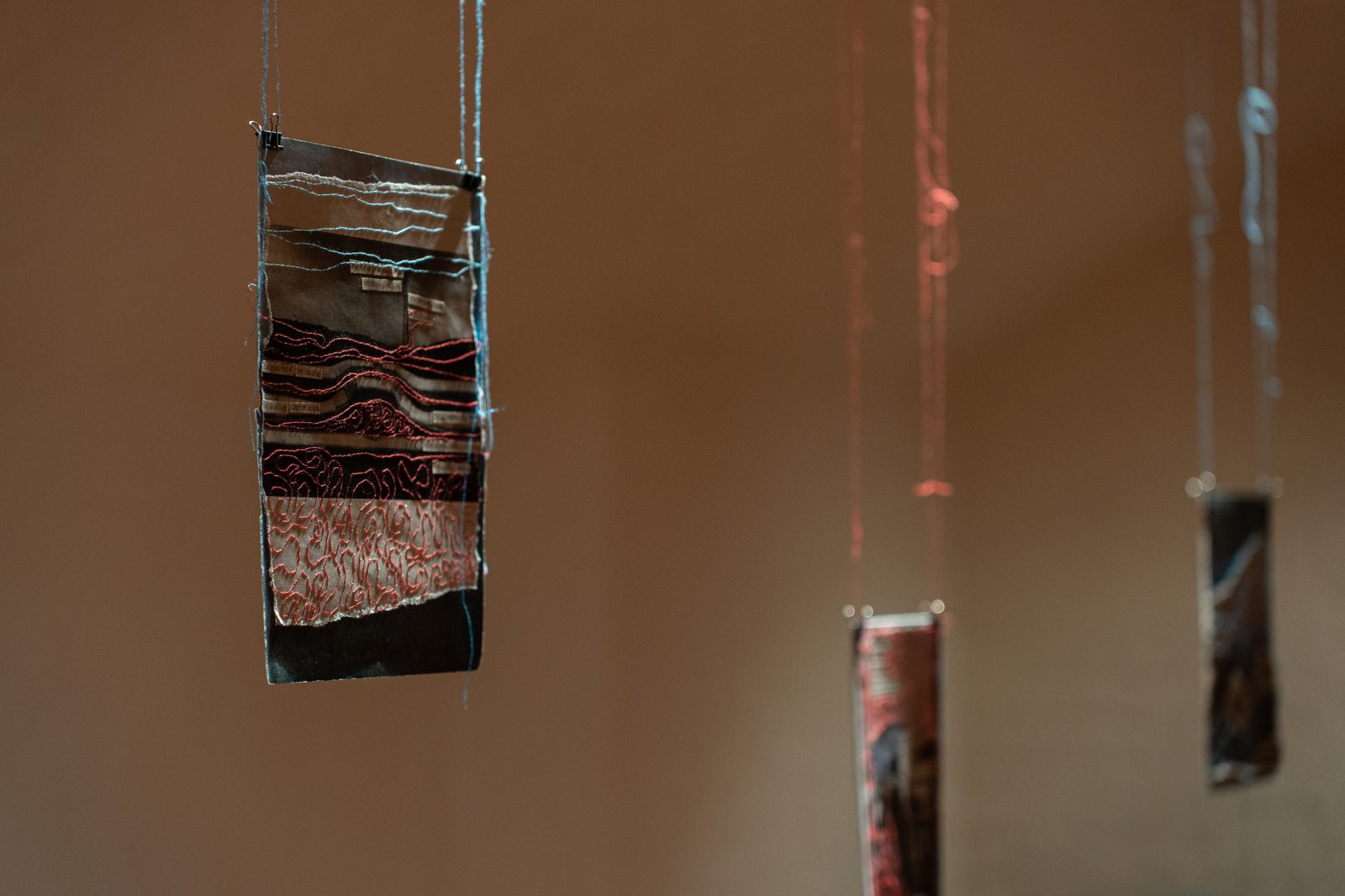
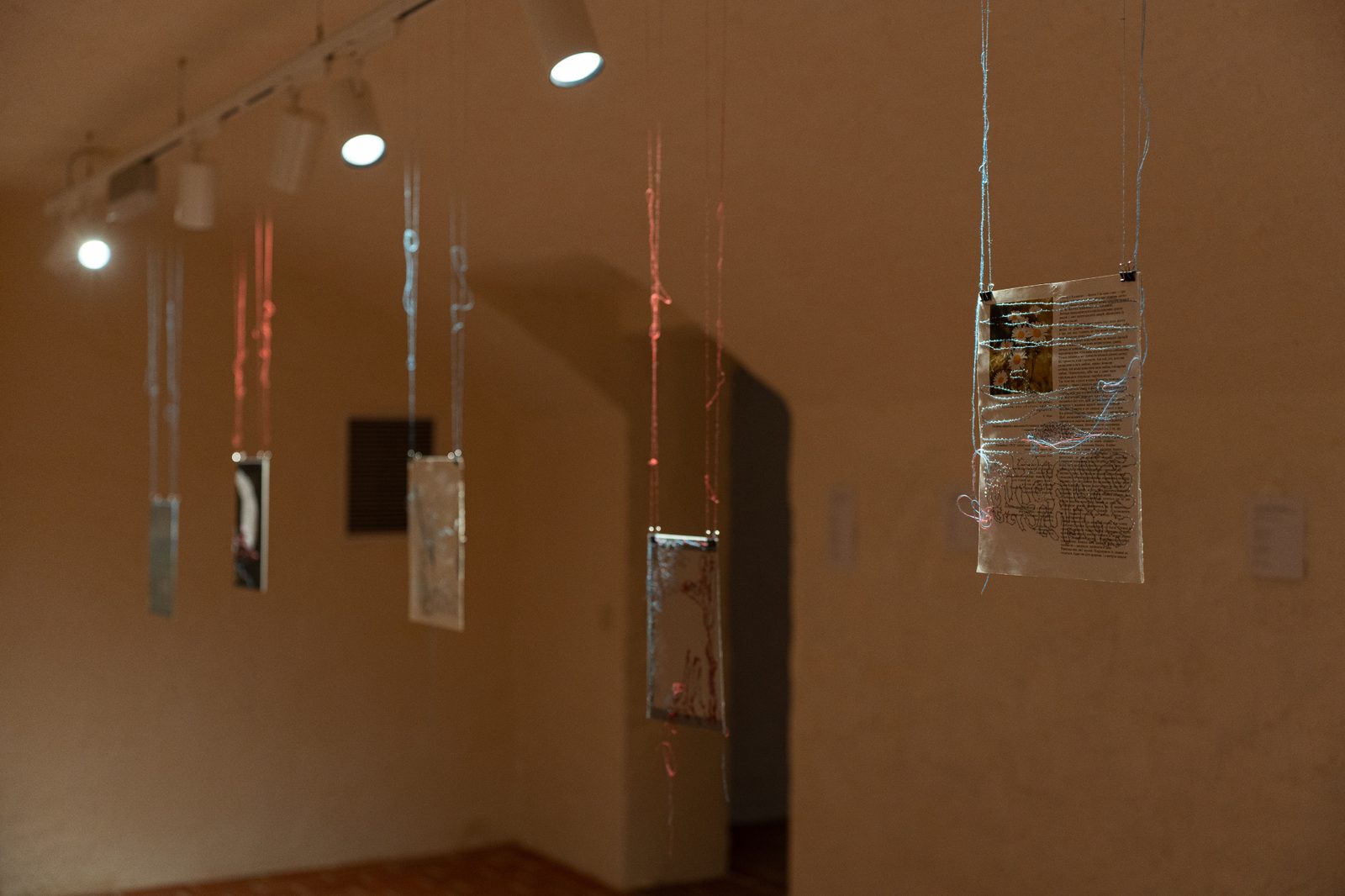
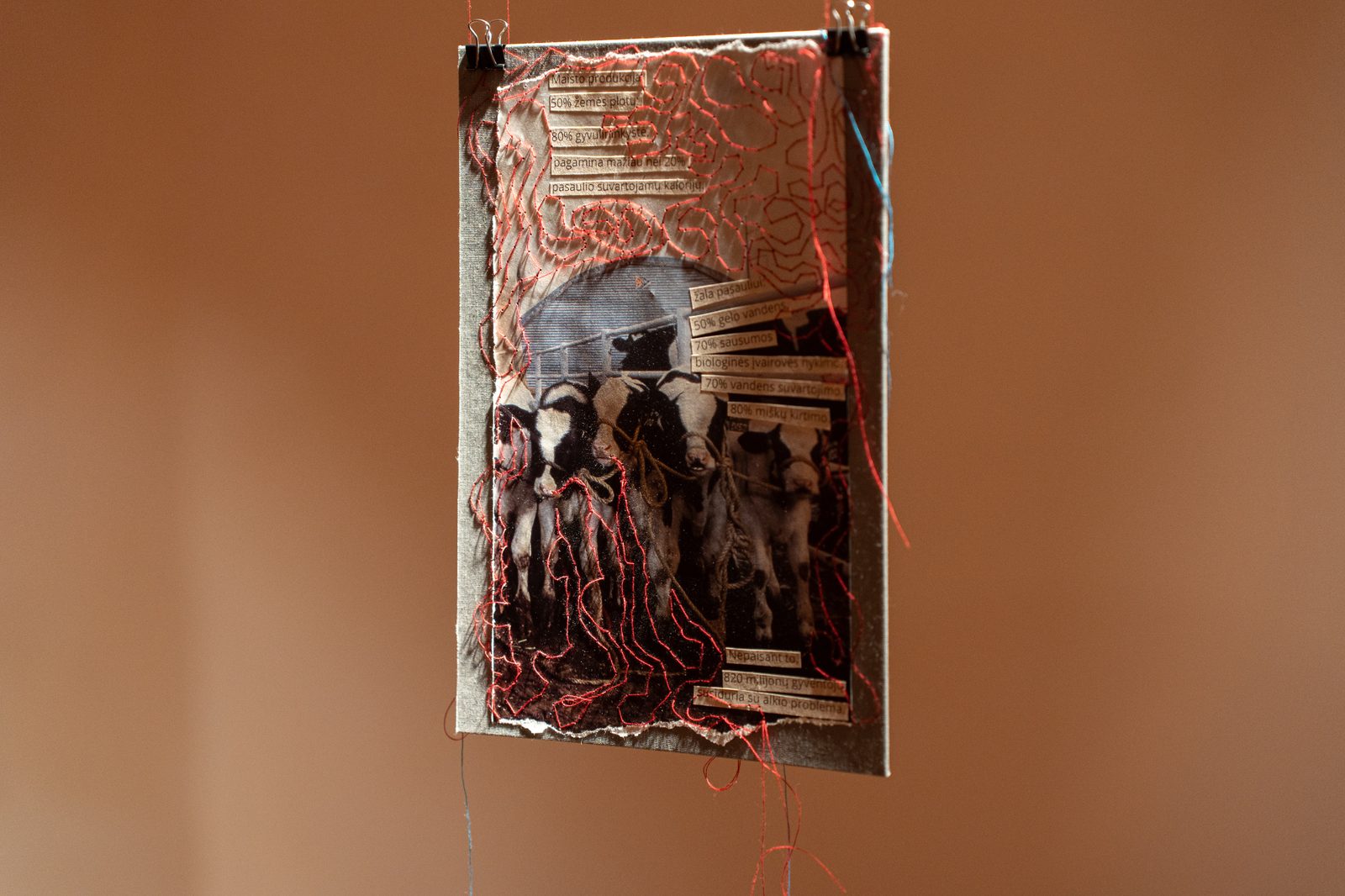
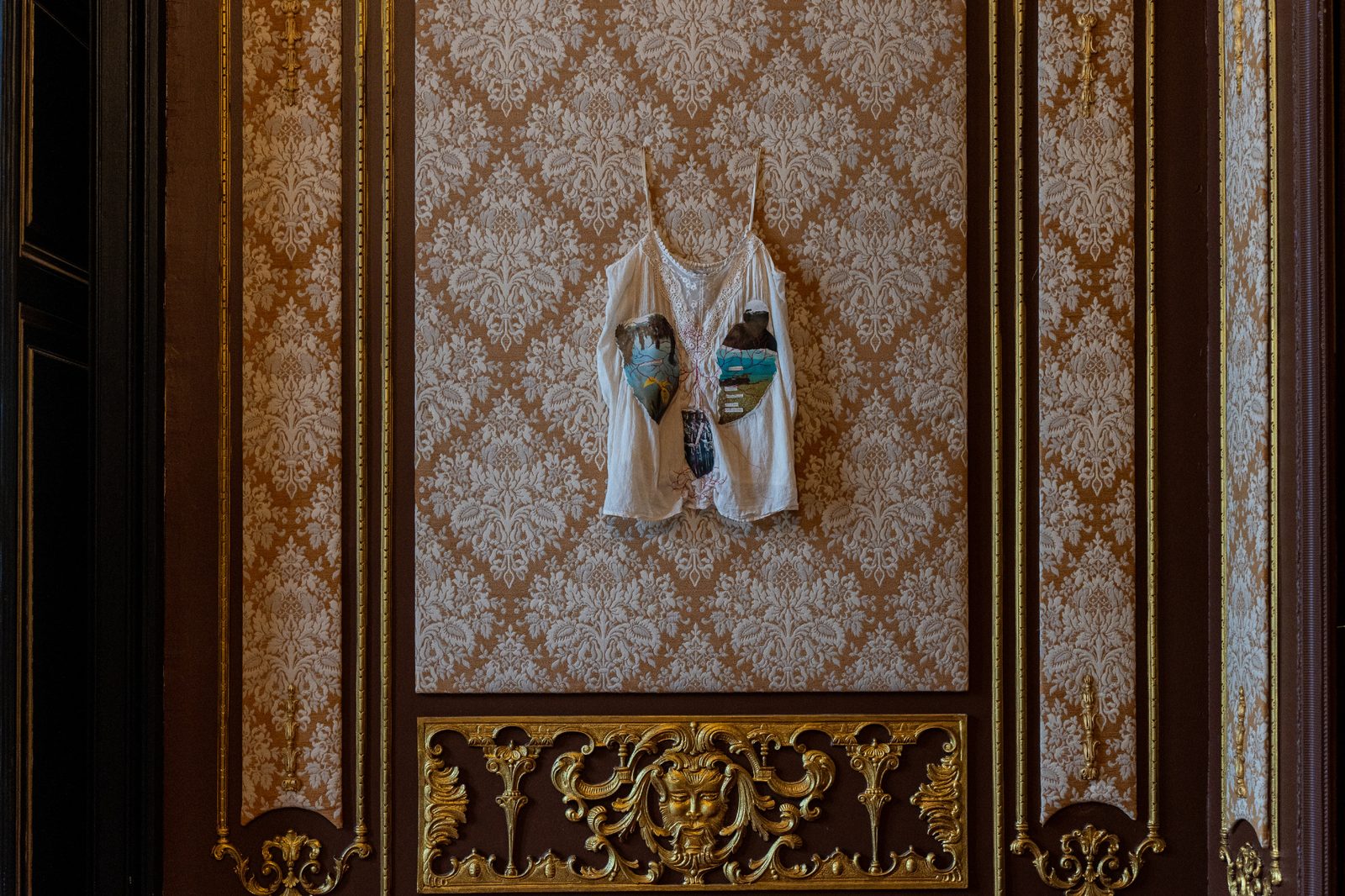
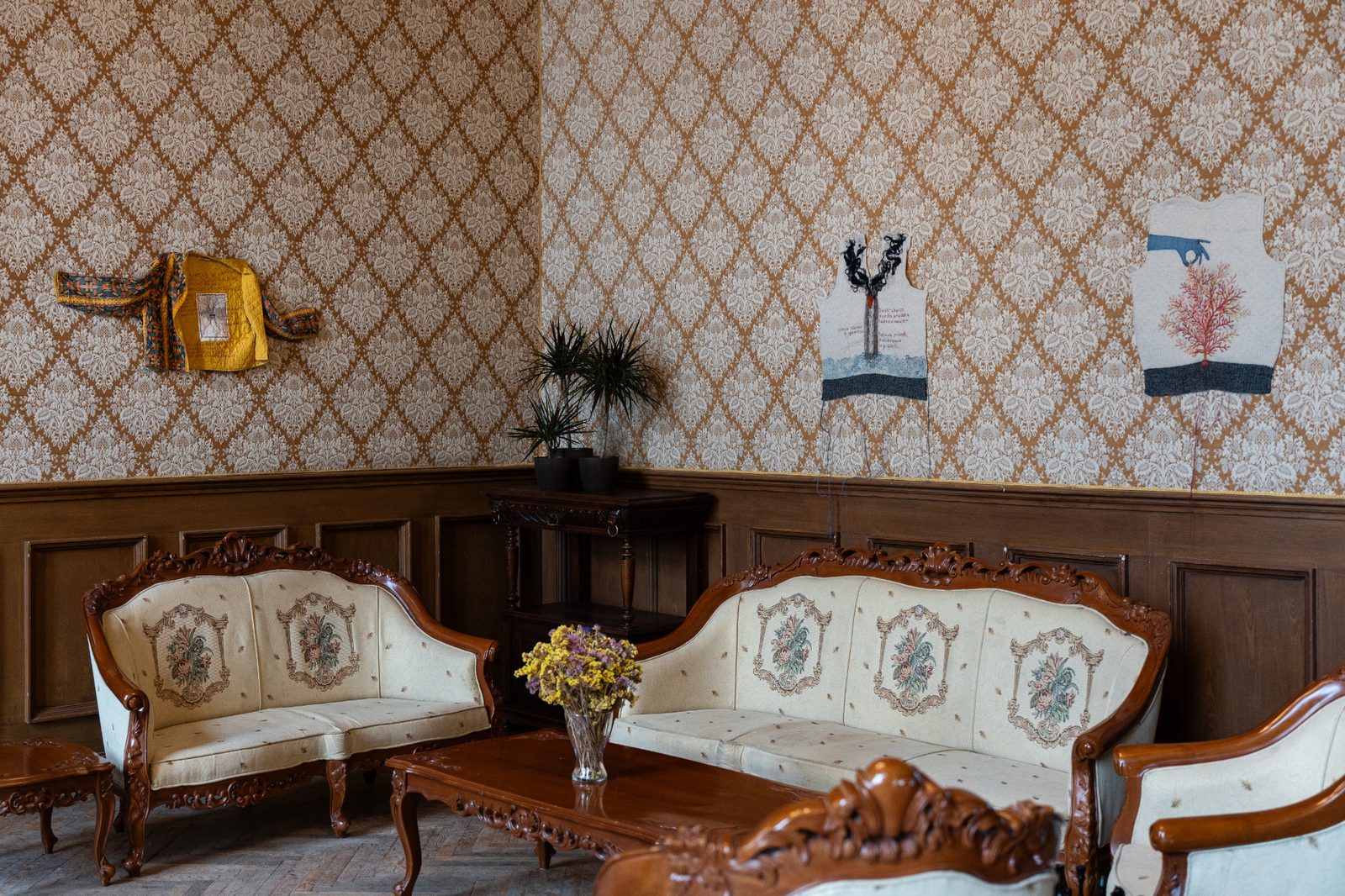
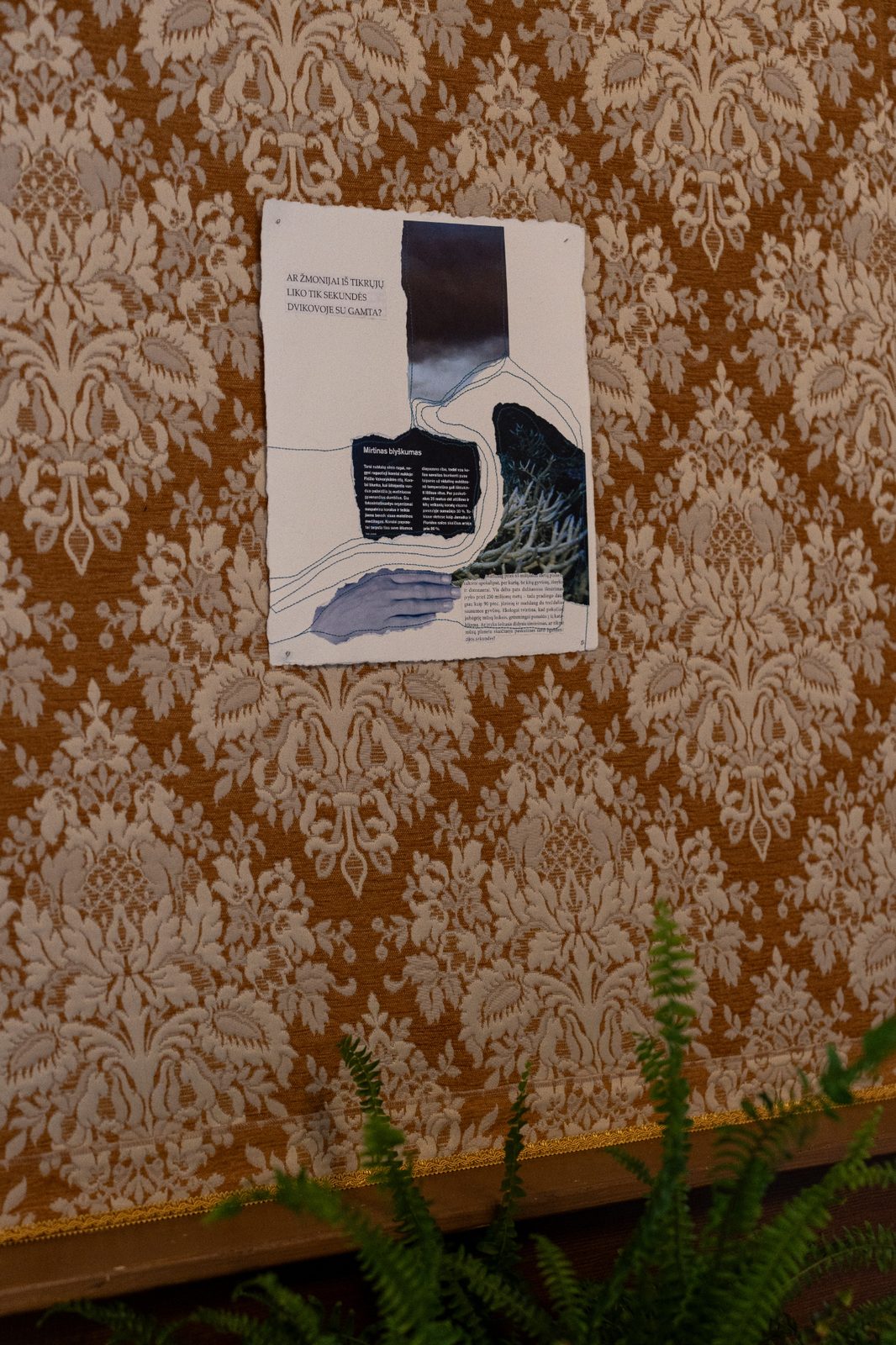
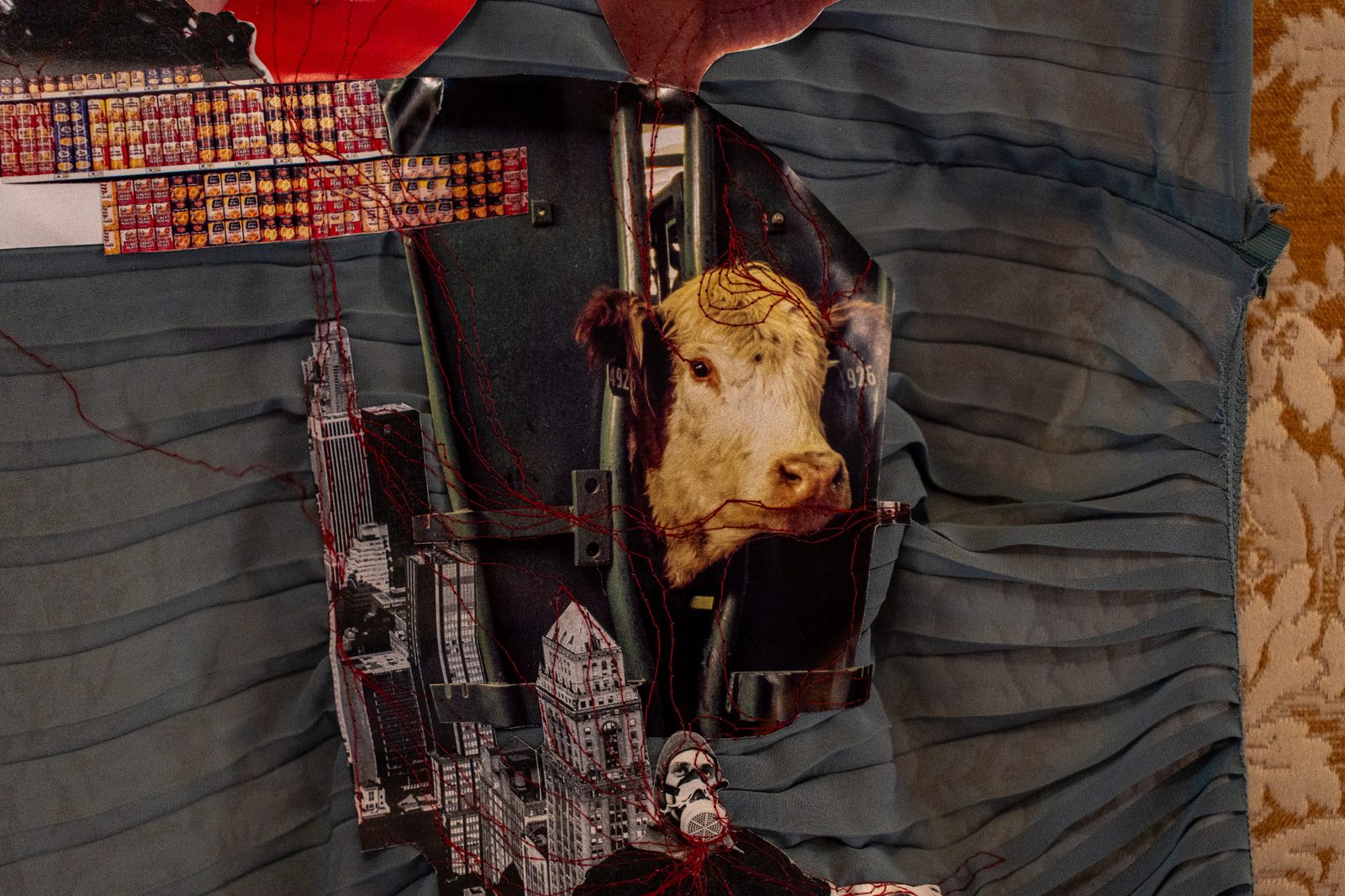
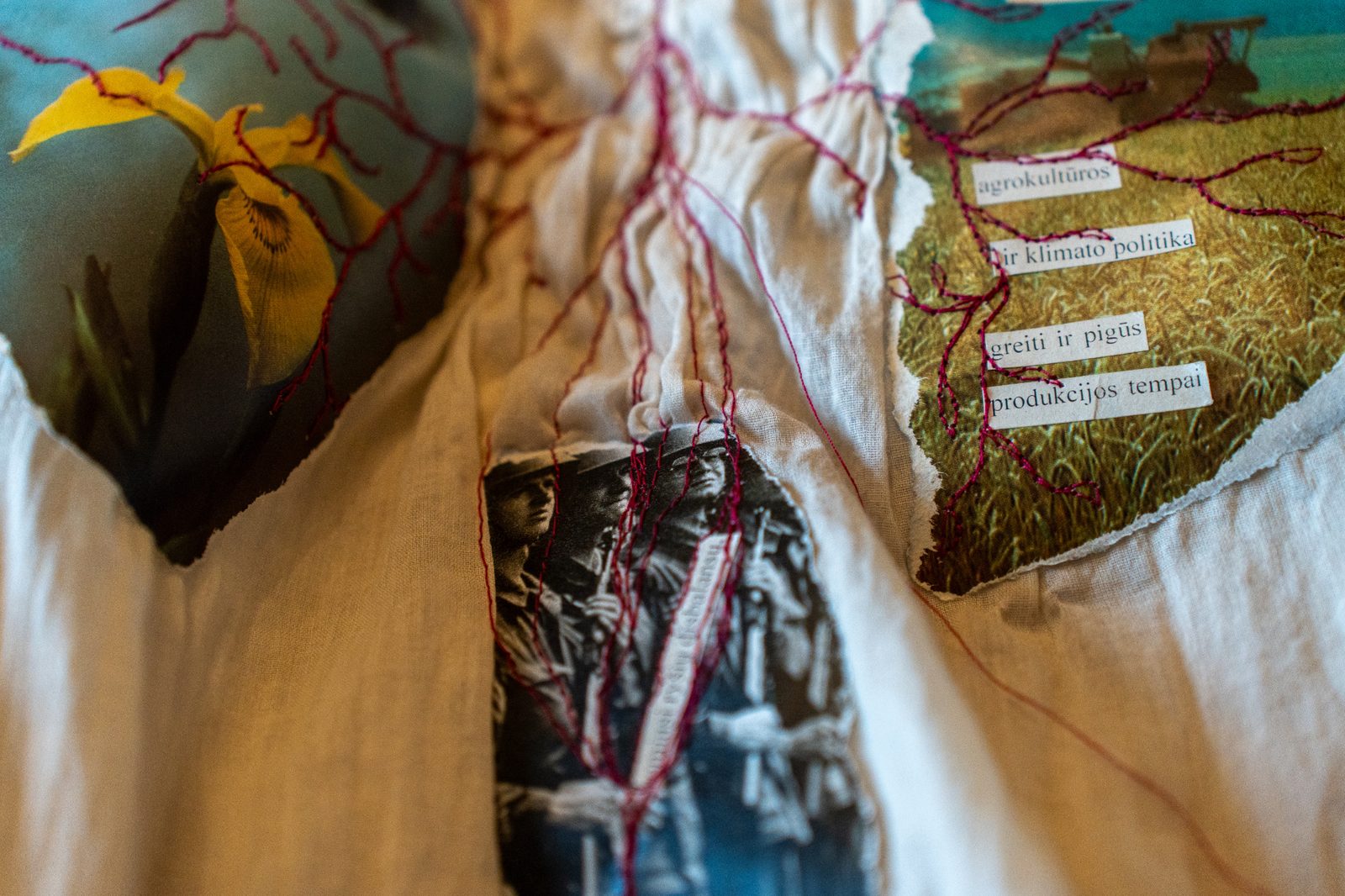
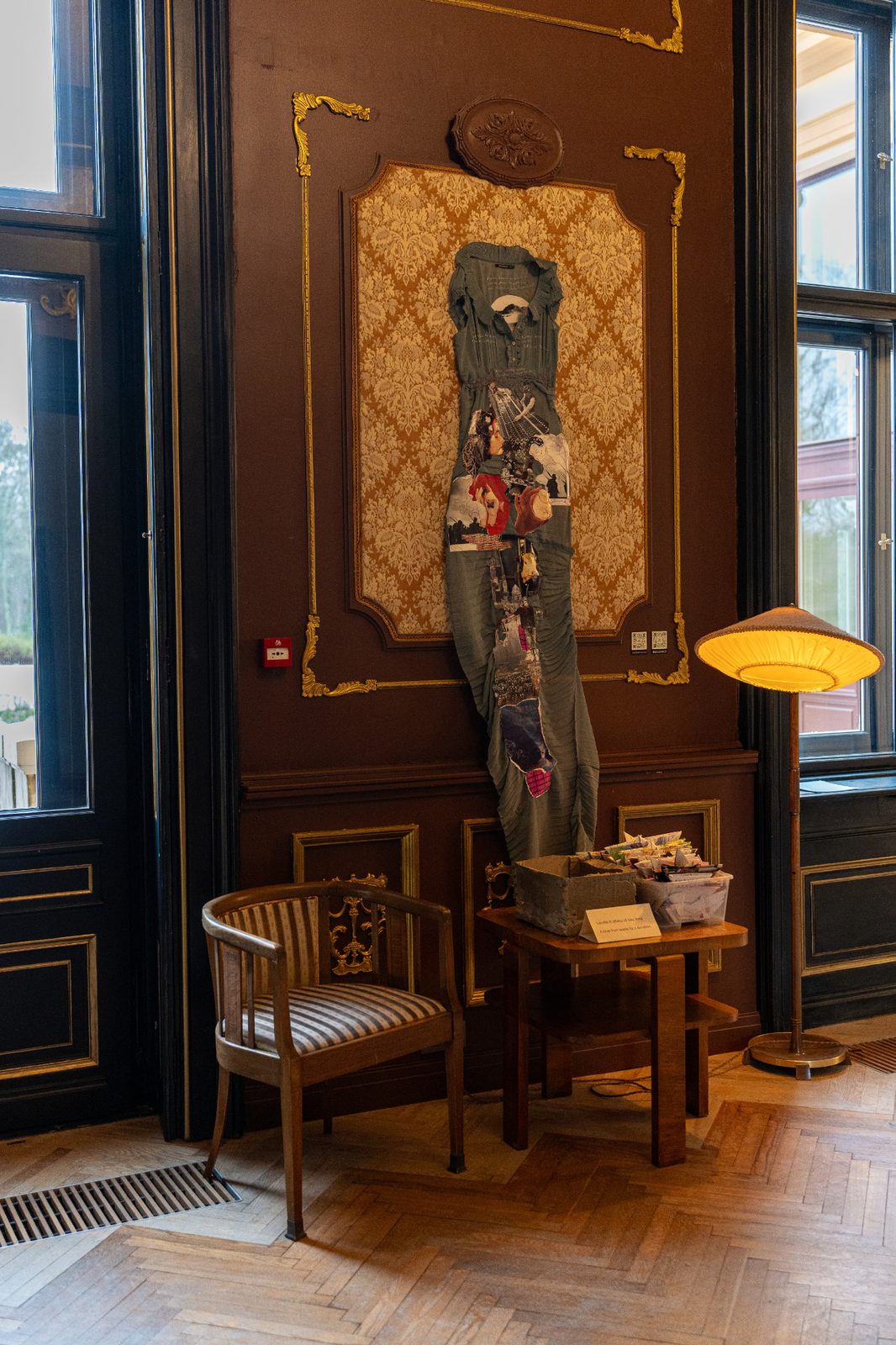
Personal artworks presented in this exhibition offer a contemplative exploration of the interplay between nature and human influence. When observing Earth from above, whether through satellite images or an airplane window, the dual beauty of landscapes and human-altered terrains becomes apparent. Whether it be the sprawling networks of cities, the stark contrast of cleared forests, or the scars left by mining endeavors, humanity's mark is omnipresent. What is equally awe-inspiring is the realization that these man-made patterns are as much a part of nature as the untouched landscapes. However, there is a growing concern that many of these patterns are being created in a repetitive manner that borders on excess. Liucija’s artistic collection, comprising a video piece, a mixed media triptych, and embroidered collages placed in strategic places of the manor, unfolds as a gradual narrative of the relationship between human and the environment.
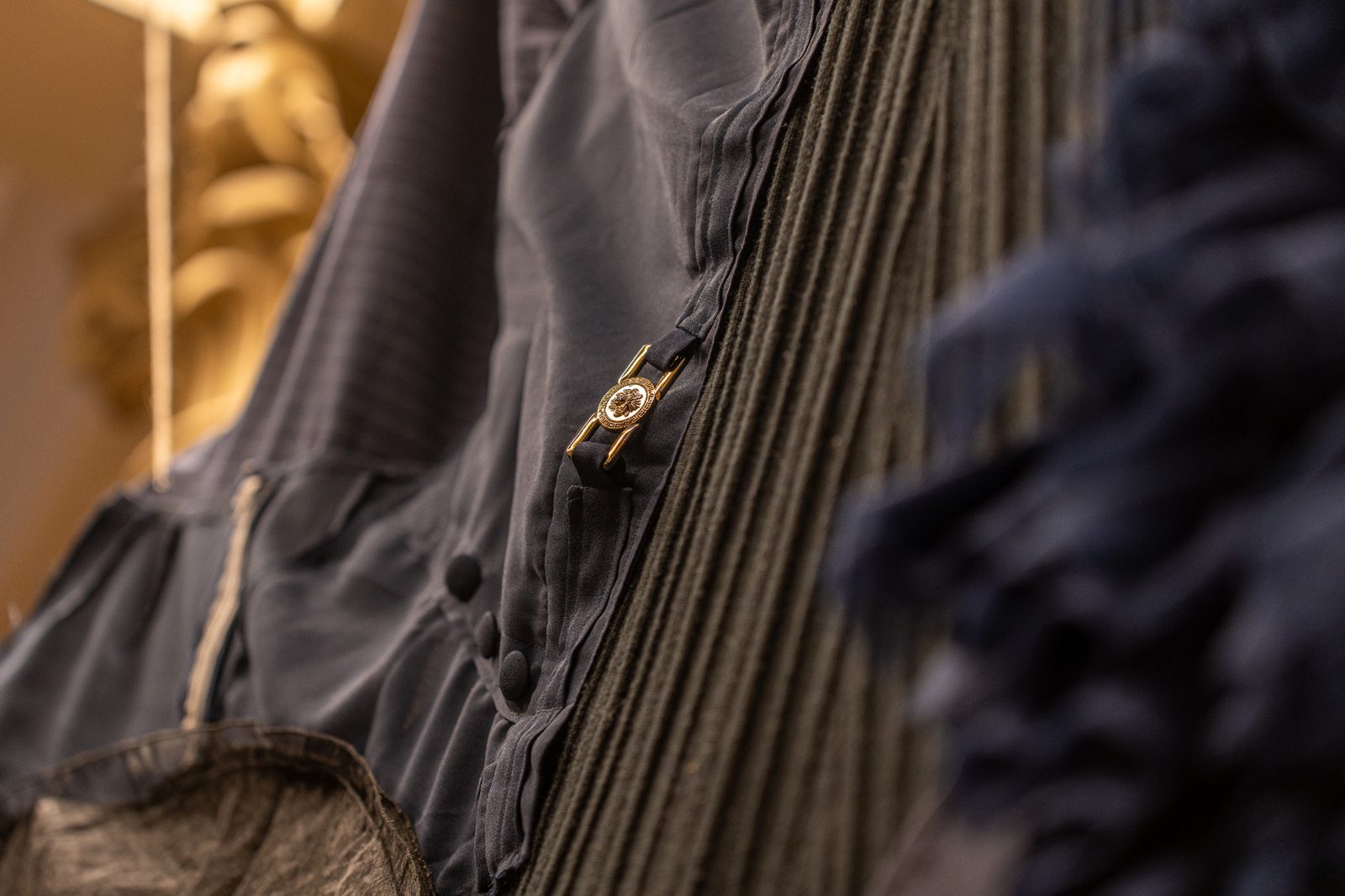
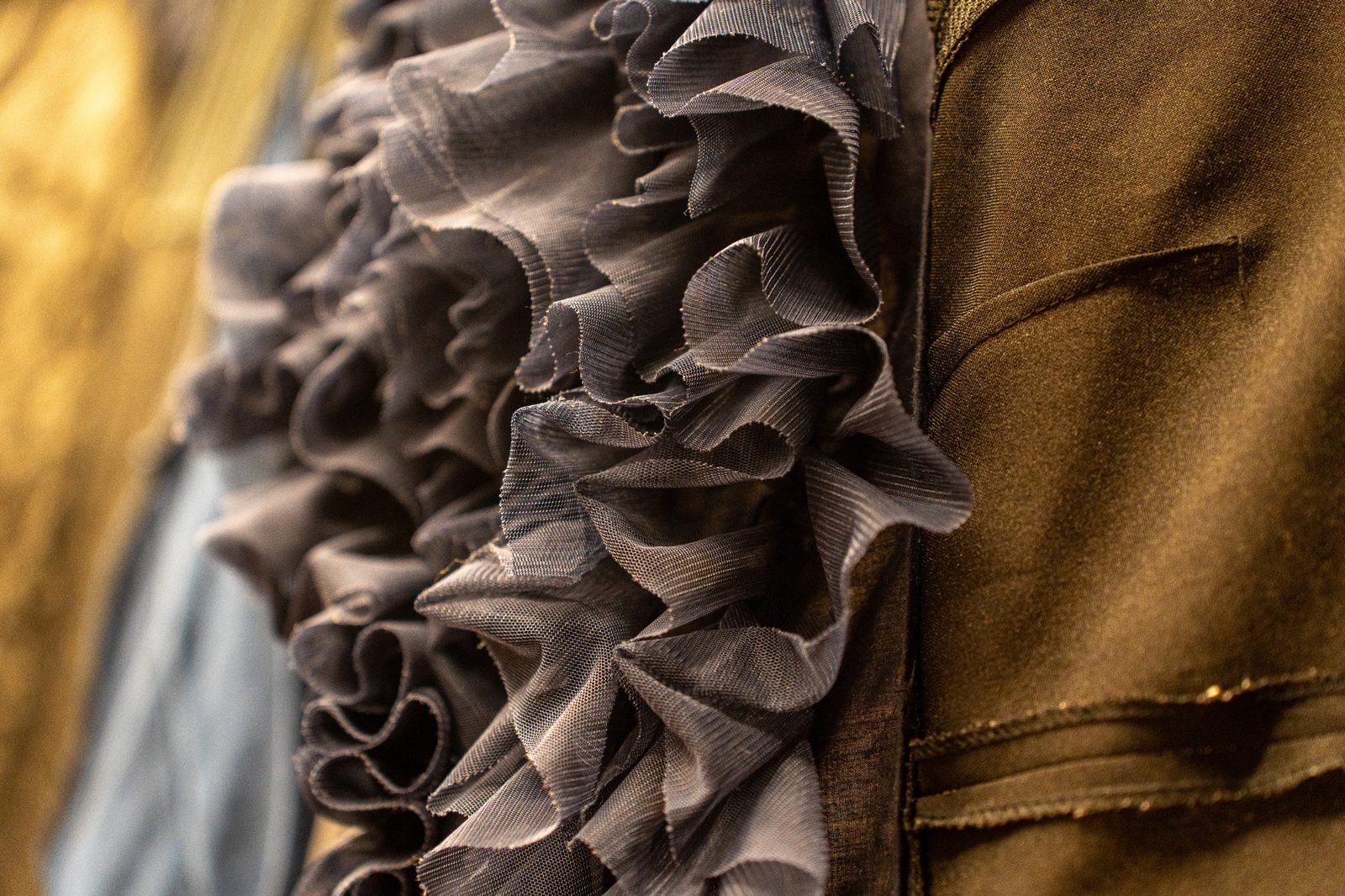
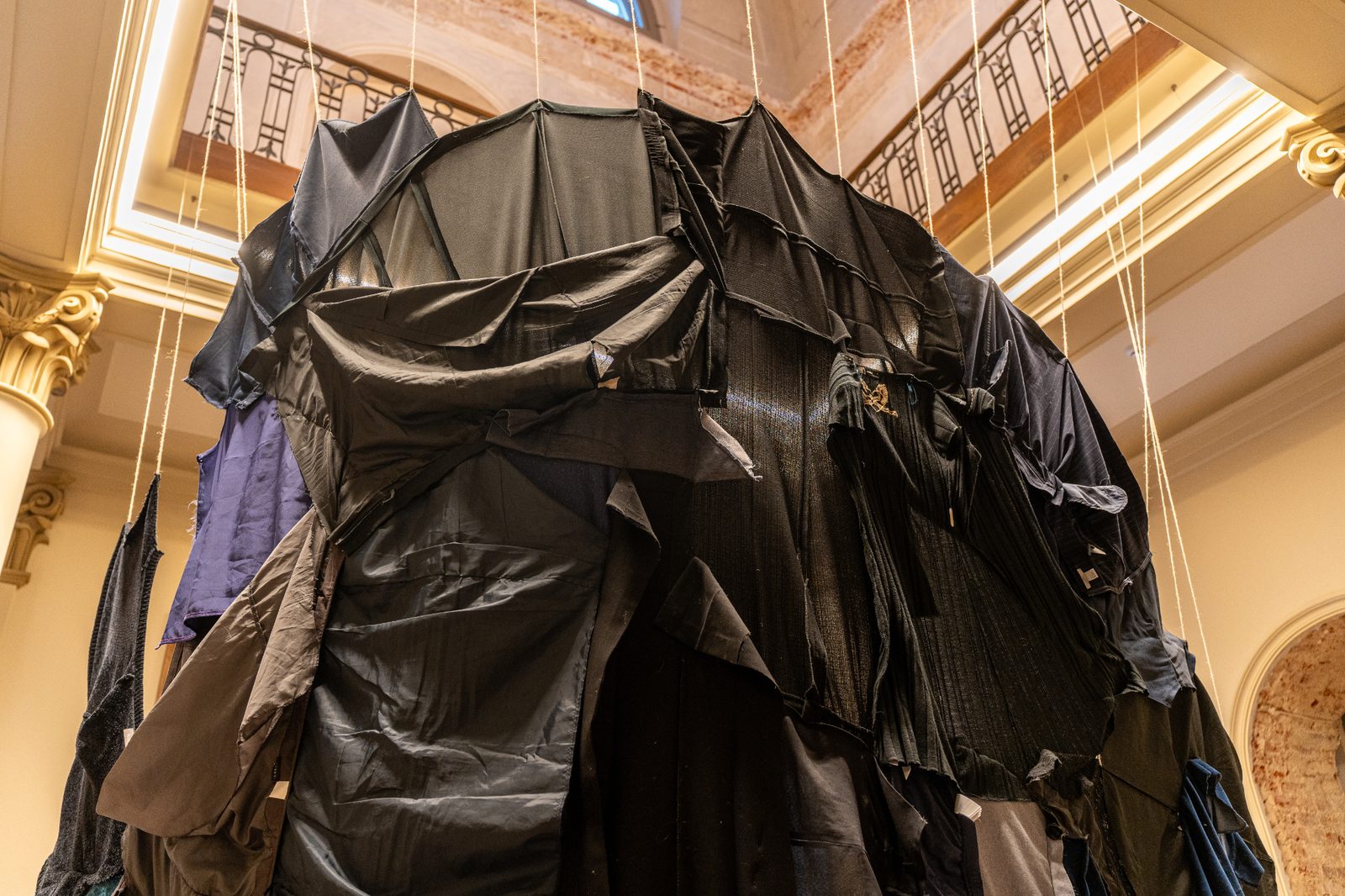
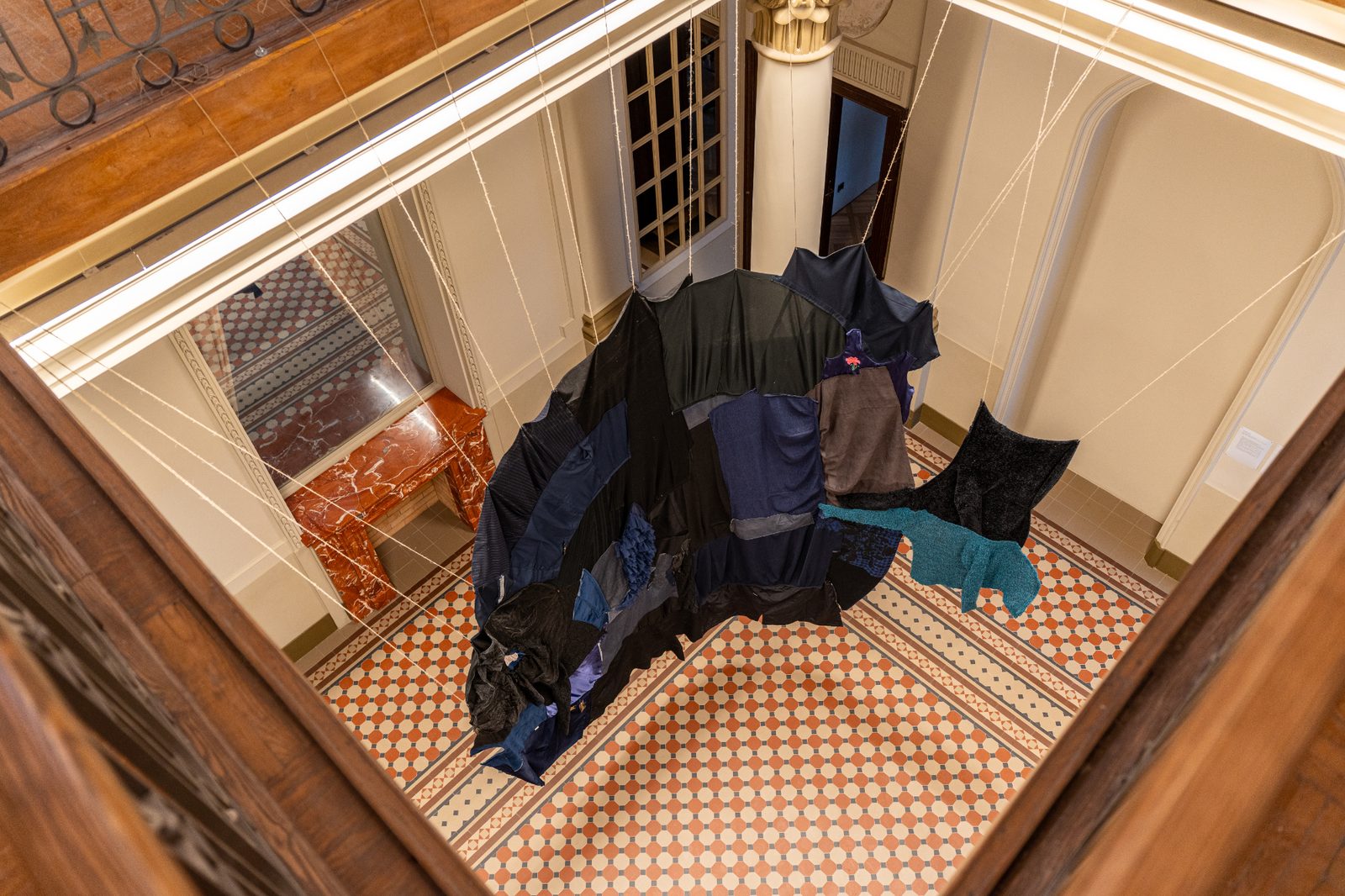
Each piece serves as a fragment in a broader story, touching on various aspects of human dominance over time. For instance, a work might reflect on the deforestation near her home, prompting contemplation on broader issues like resource overconsumption or the invasive nature of human activities. Liucija uses second-hand materials, such as clothing, canvases or magazines, and a diverse array of sources in her creative process, blending information from texts, documentaries, cut-outs from magazines, found items, videos, and conversations. These elements, along with intuitive abstractions, form a collage of interconnected fragments that try to bridge the perceived gap between nature and culture. In the world where human activity leans towards overexploitation and destruction, artist contemplates on discerning when it is enough and how to mitigate overconsumption.
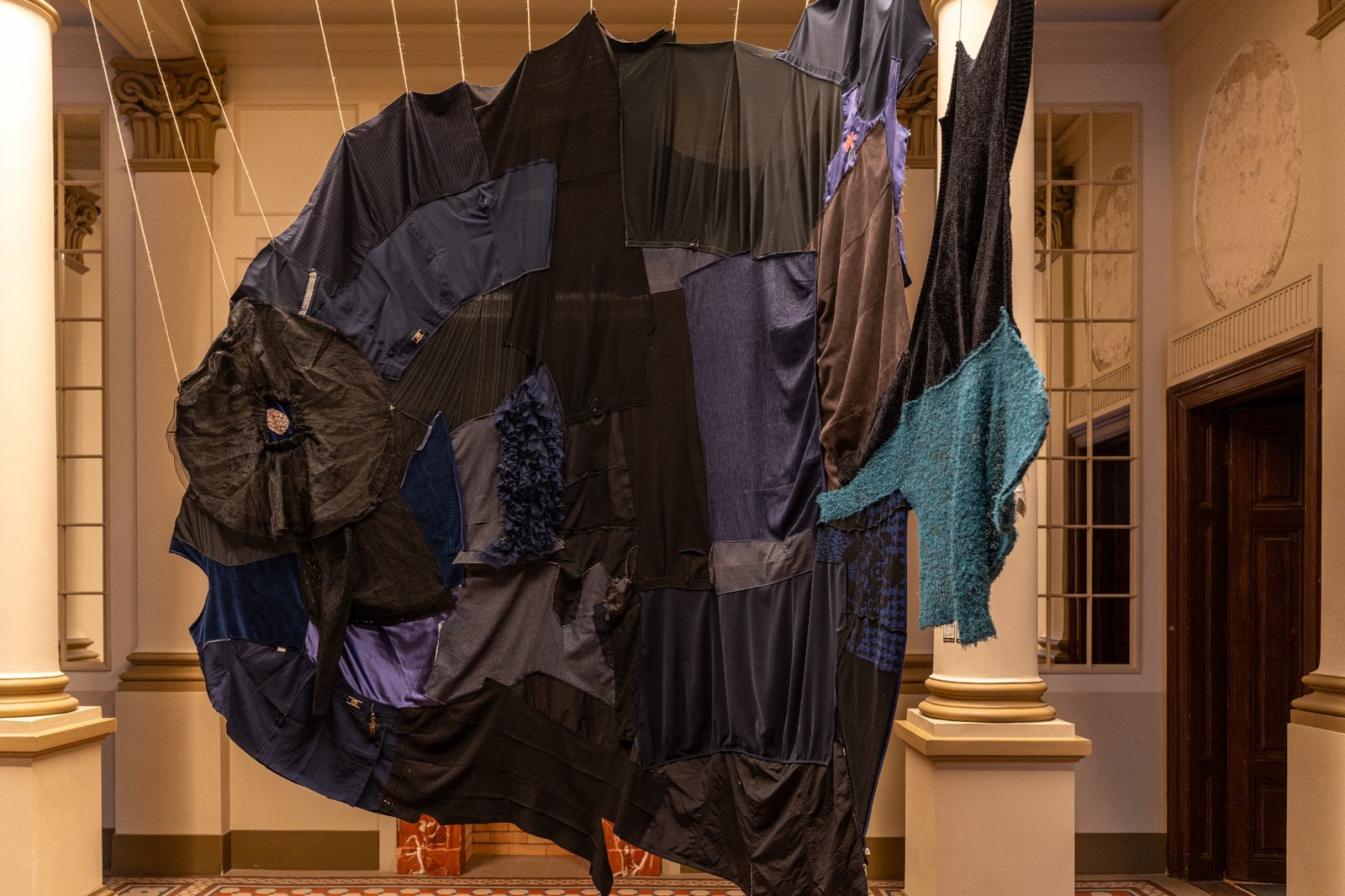
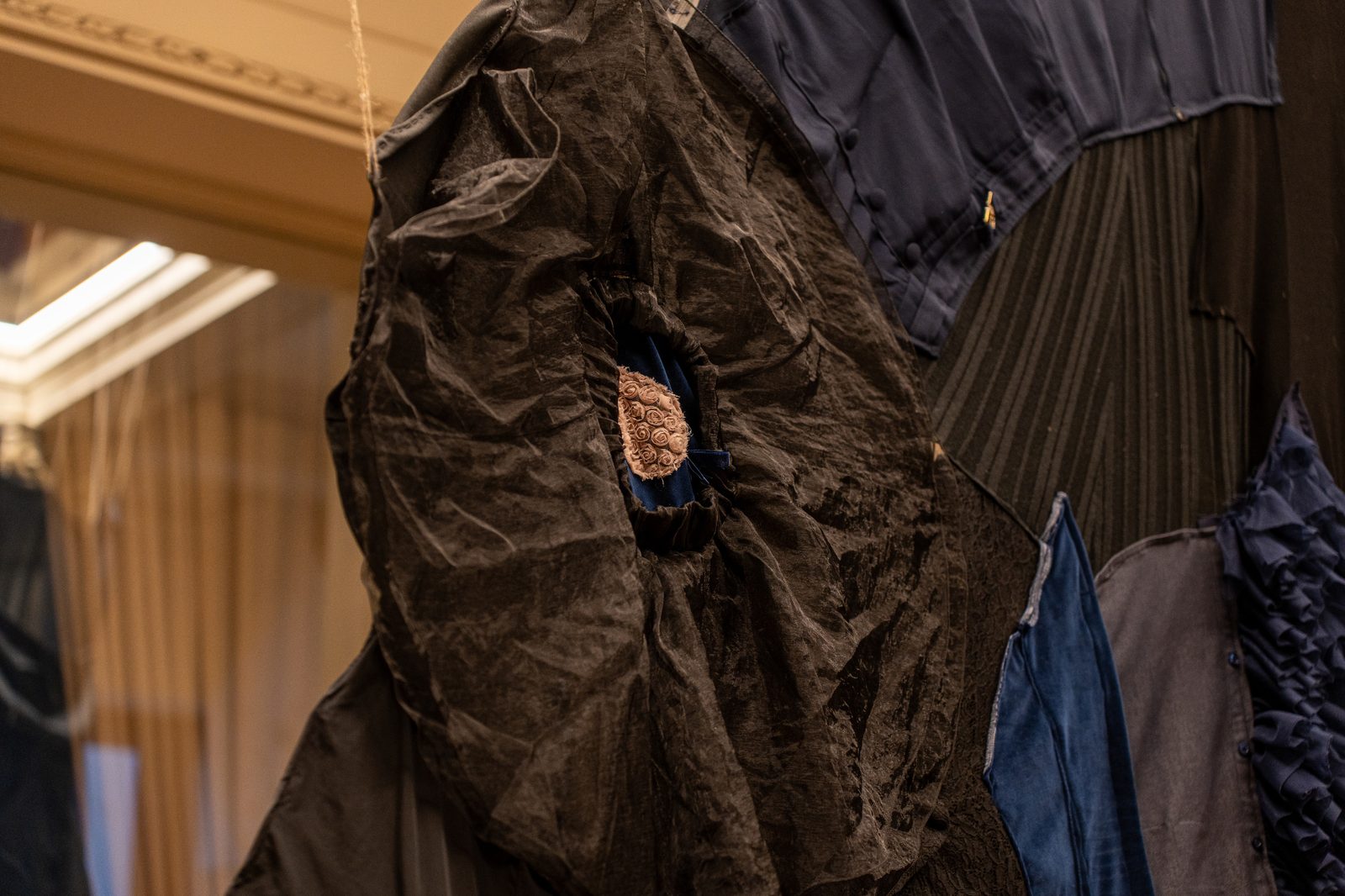
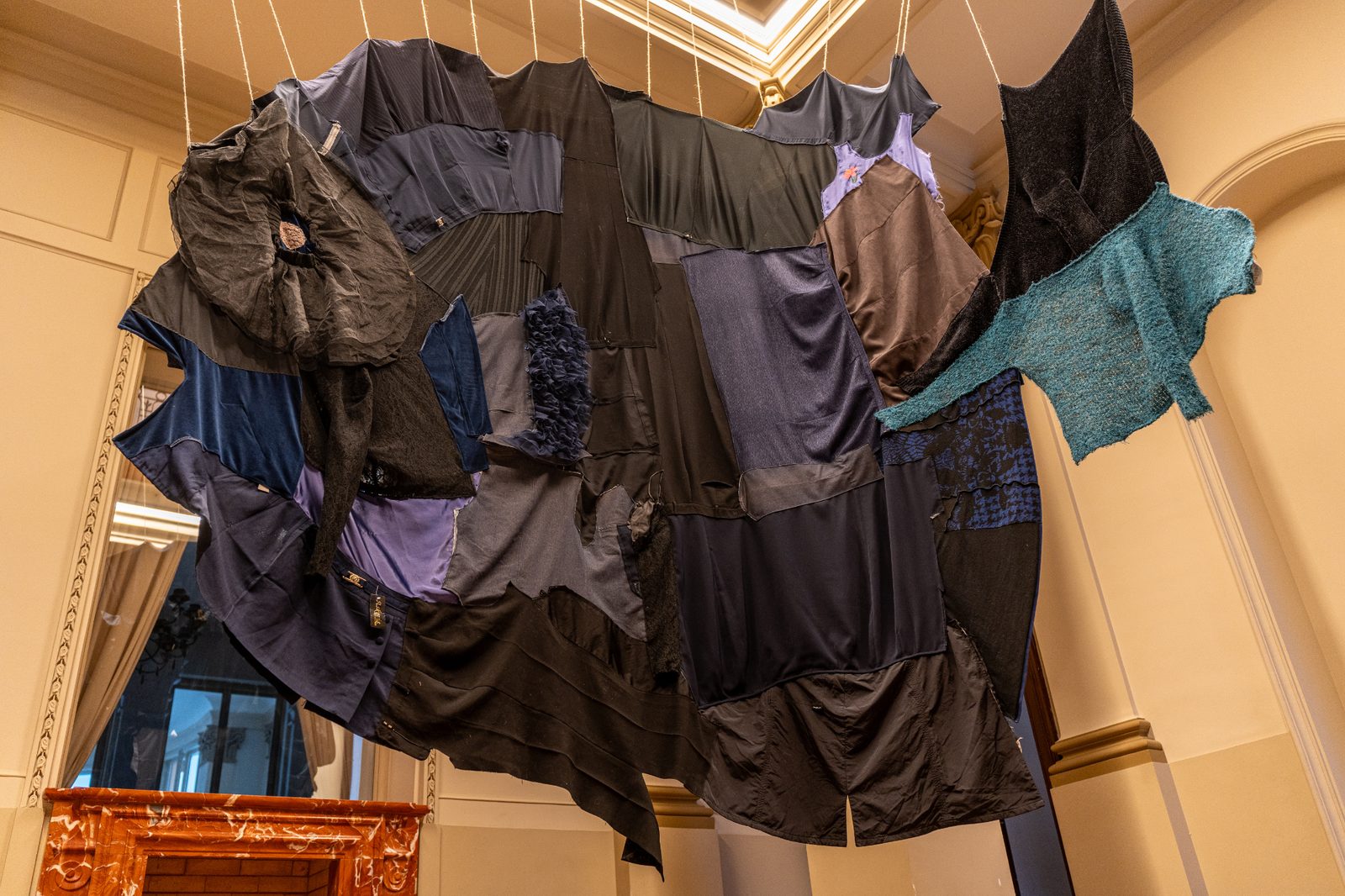
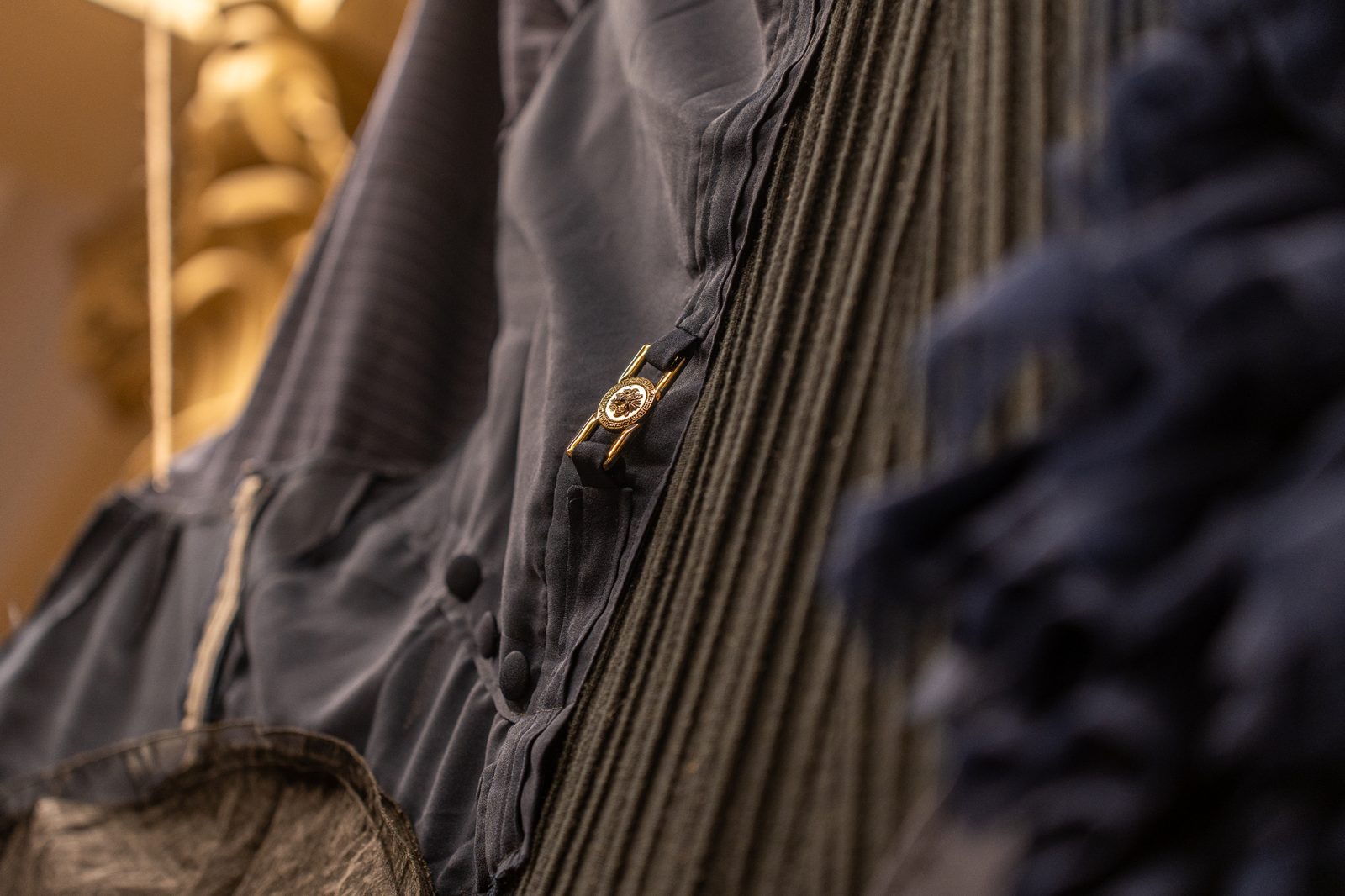
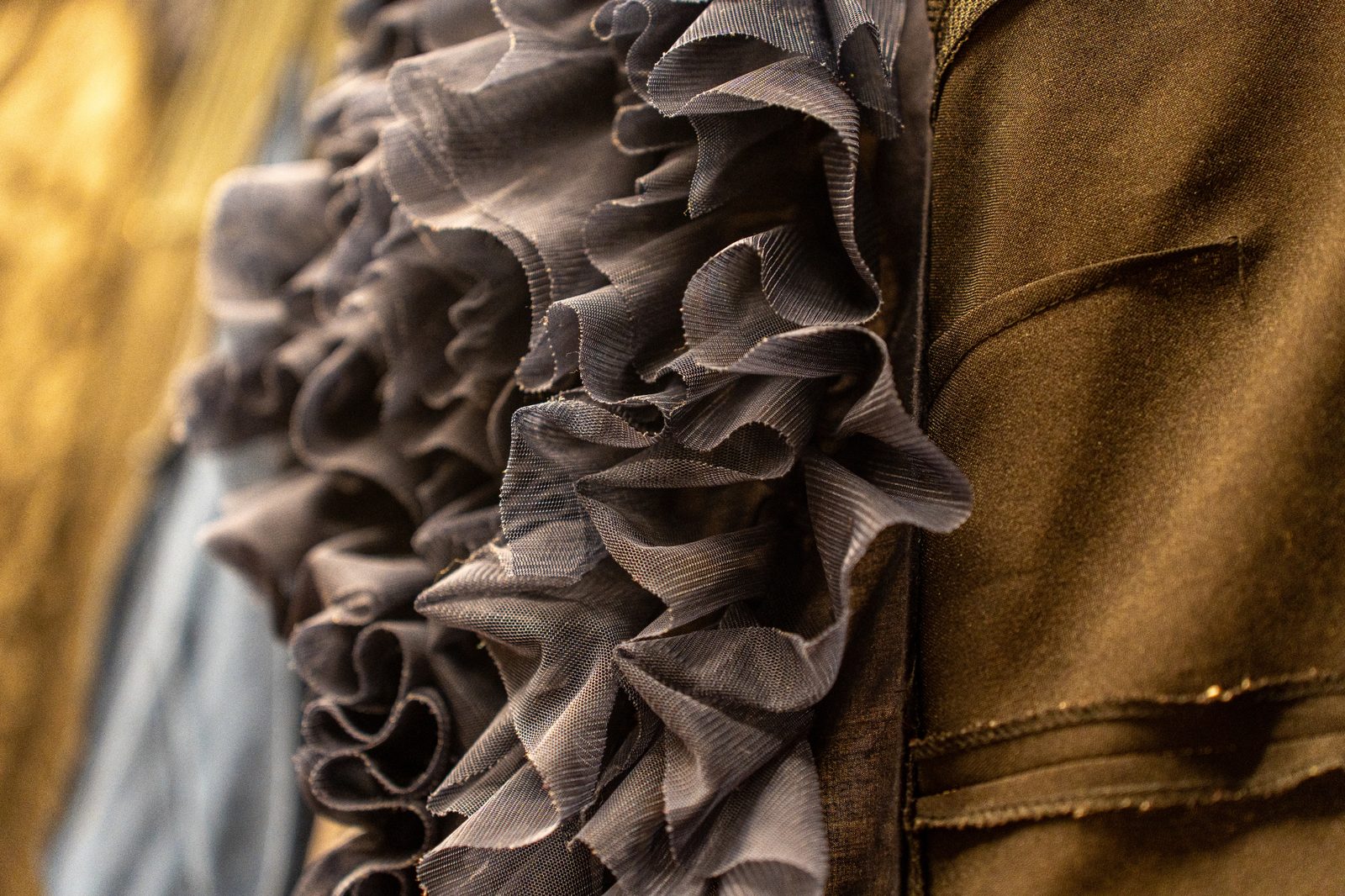
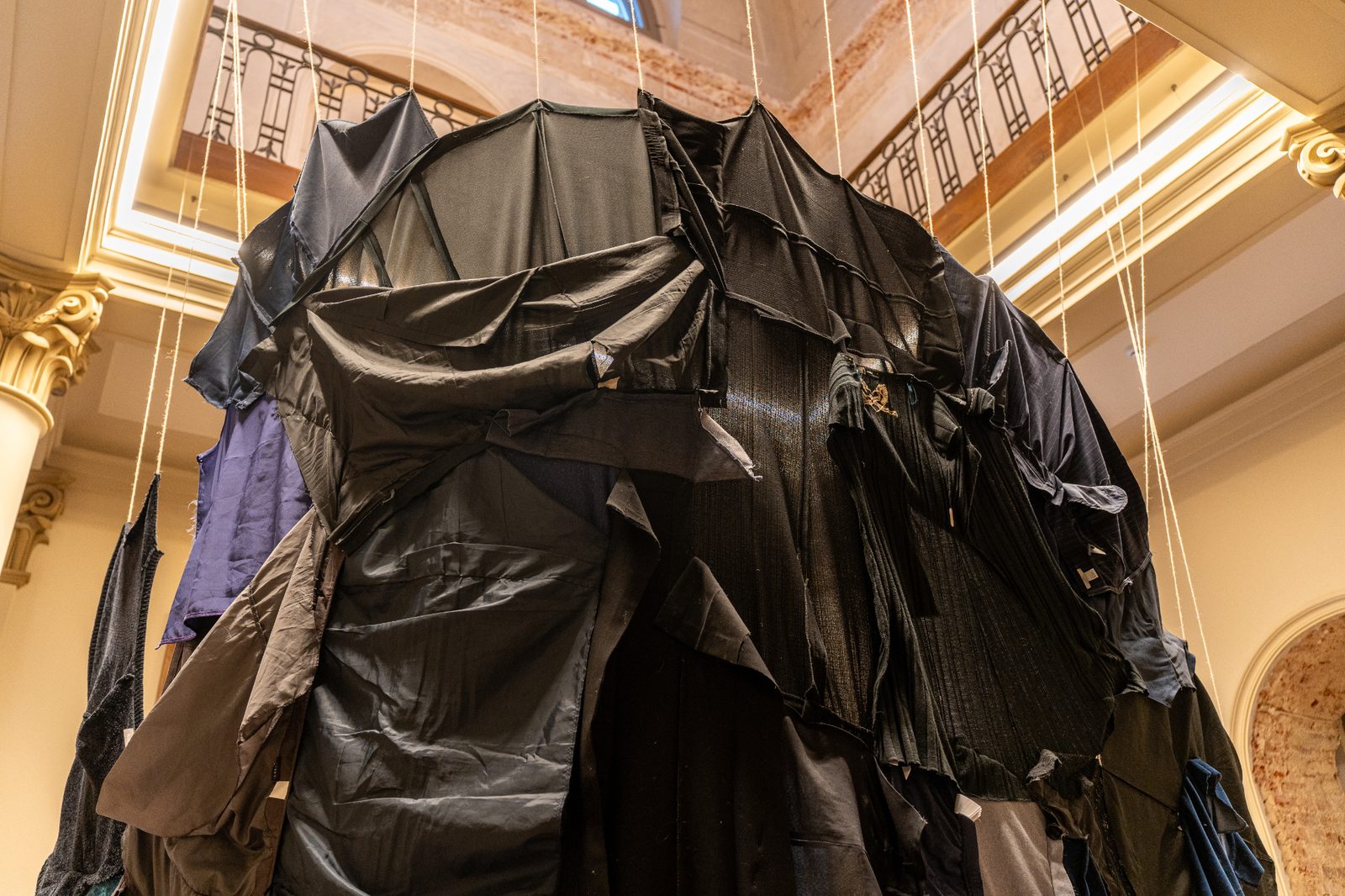
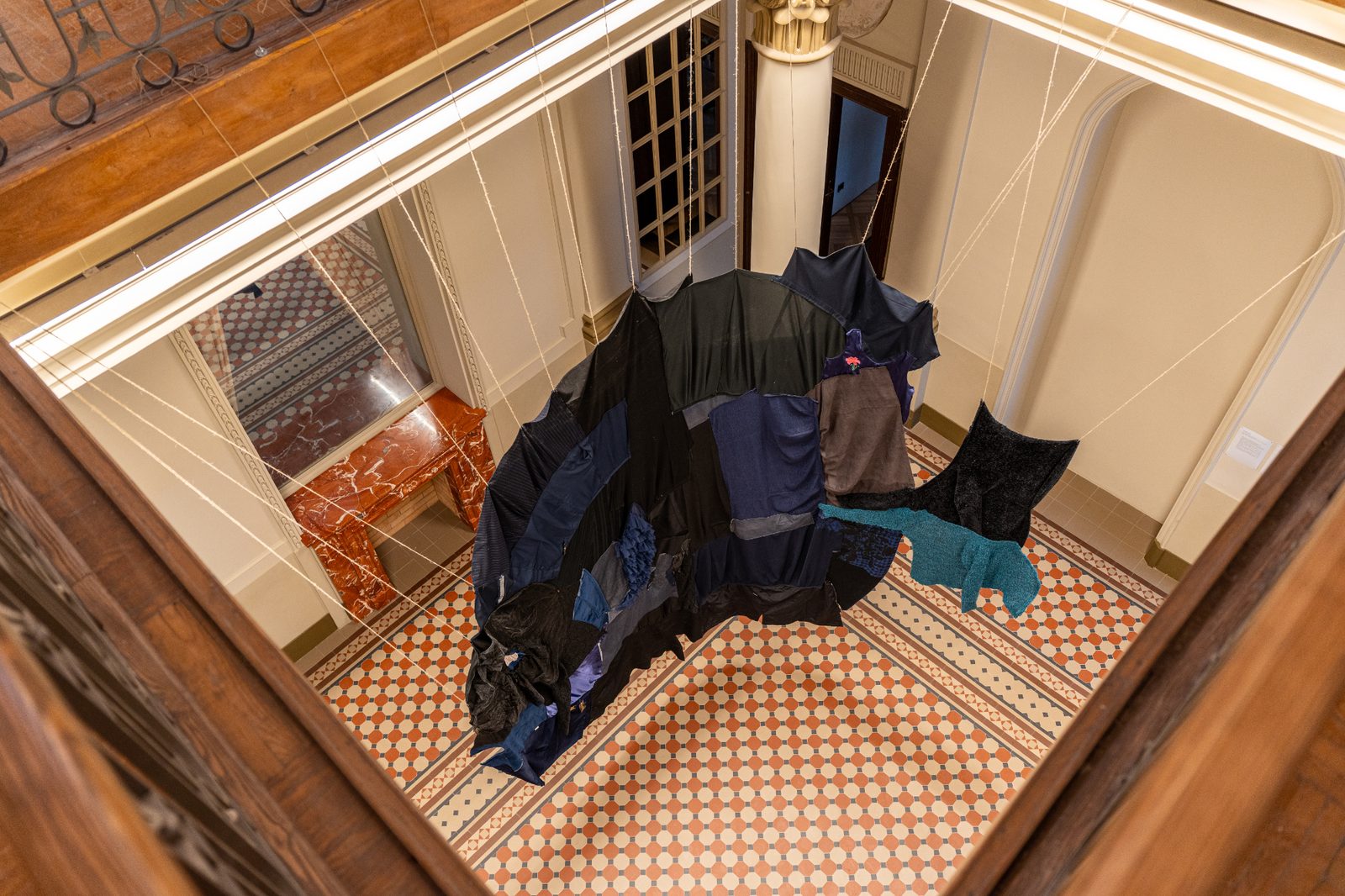
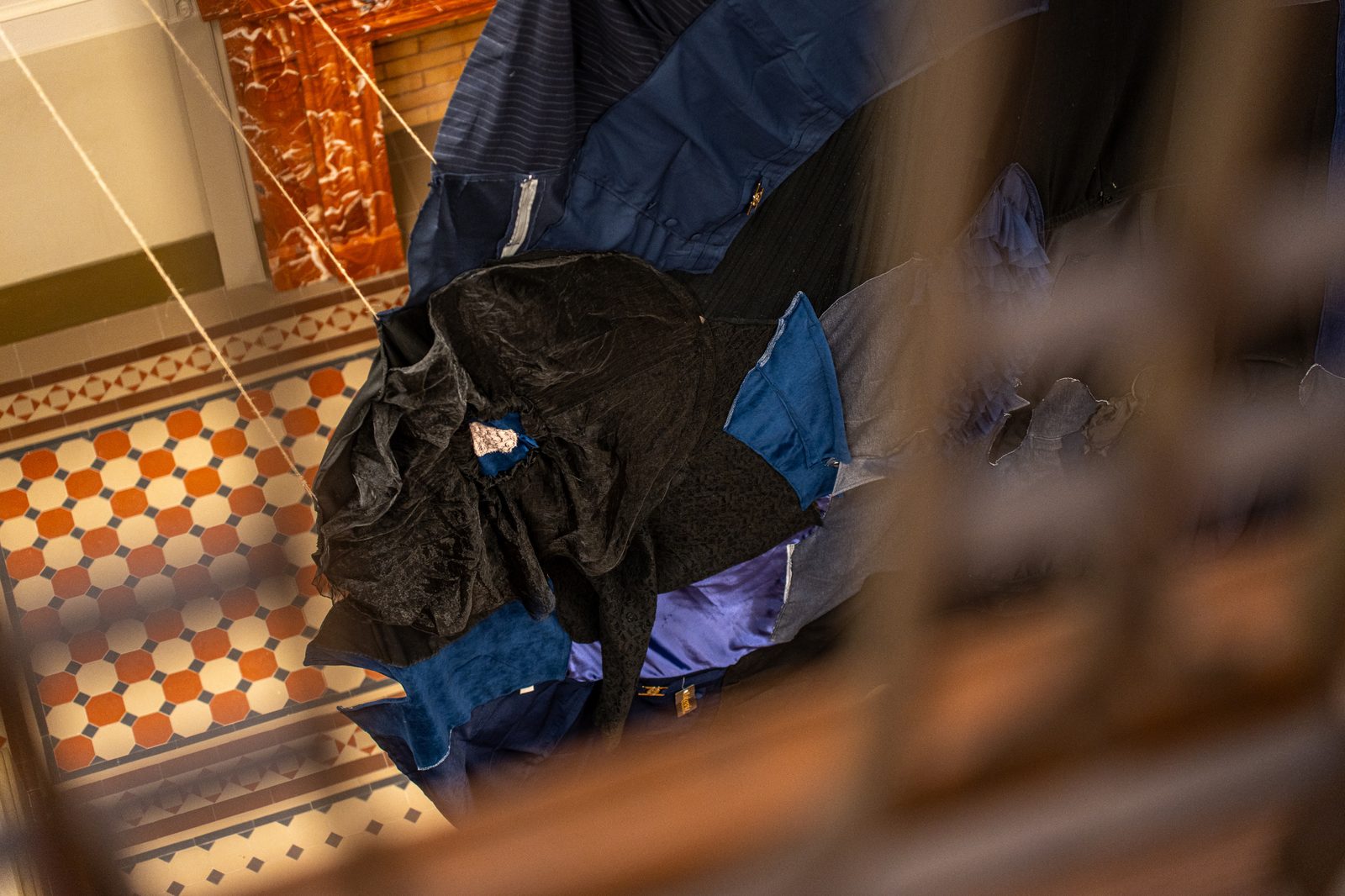
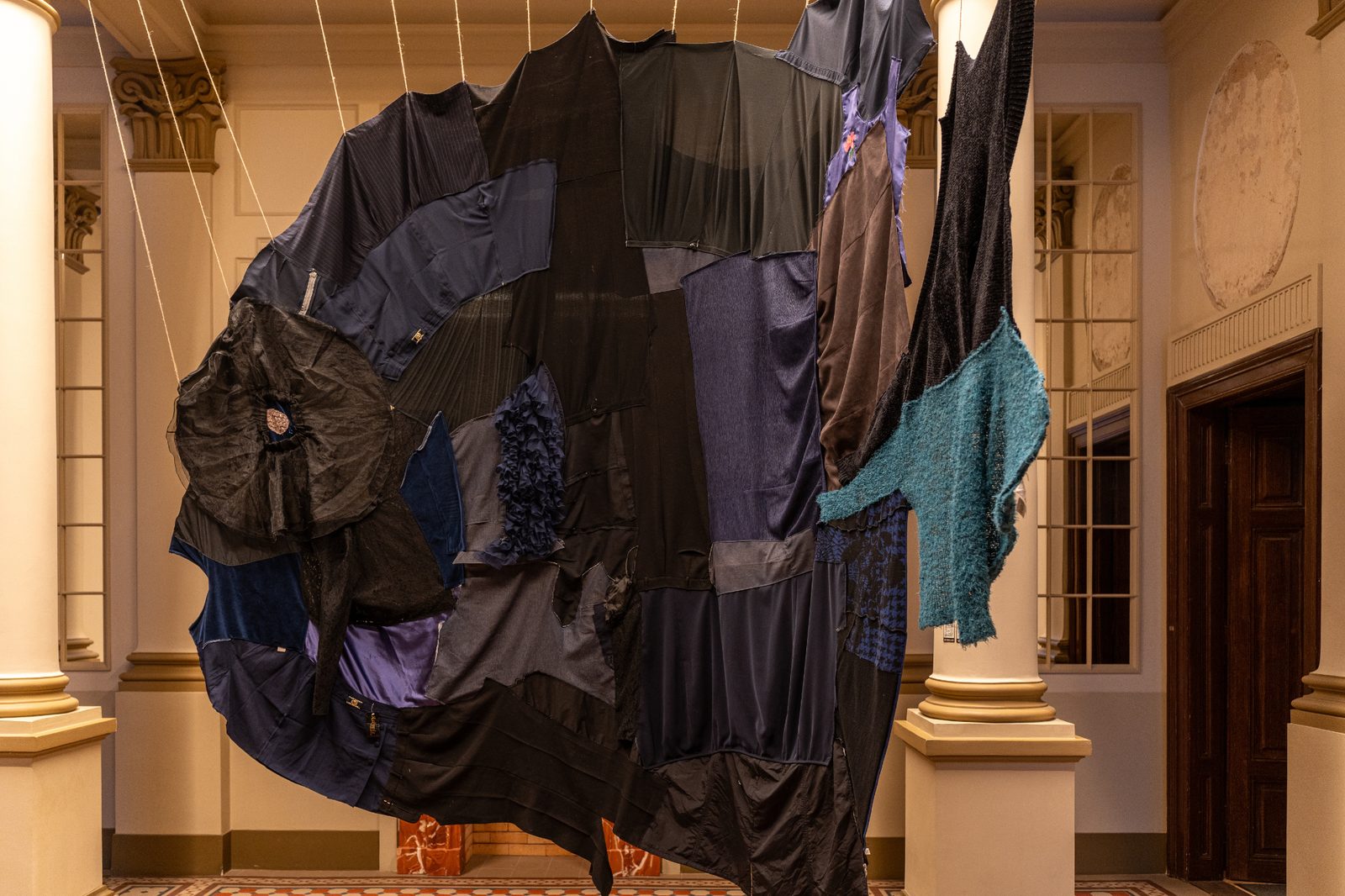
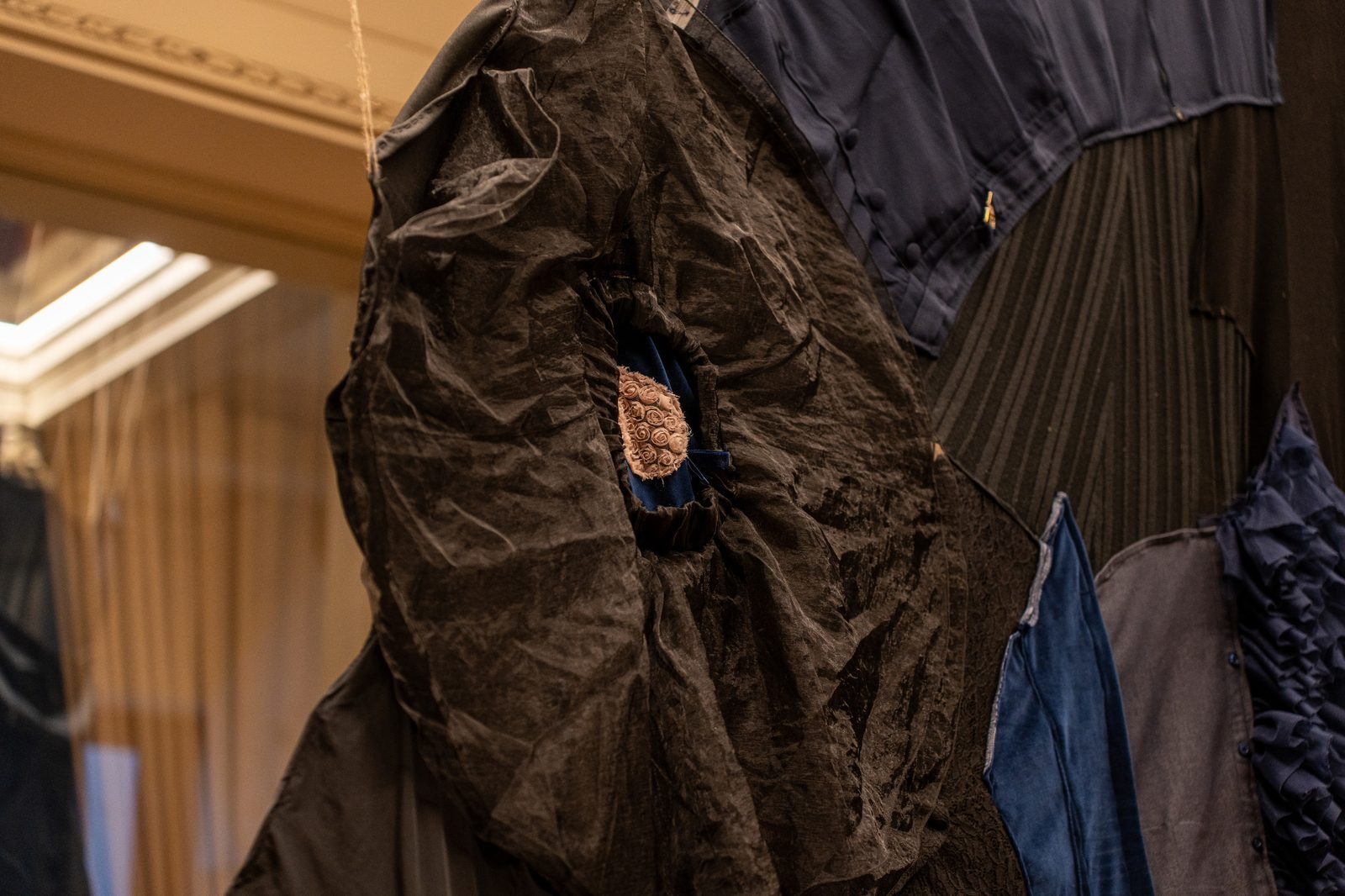
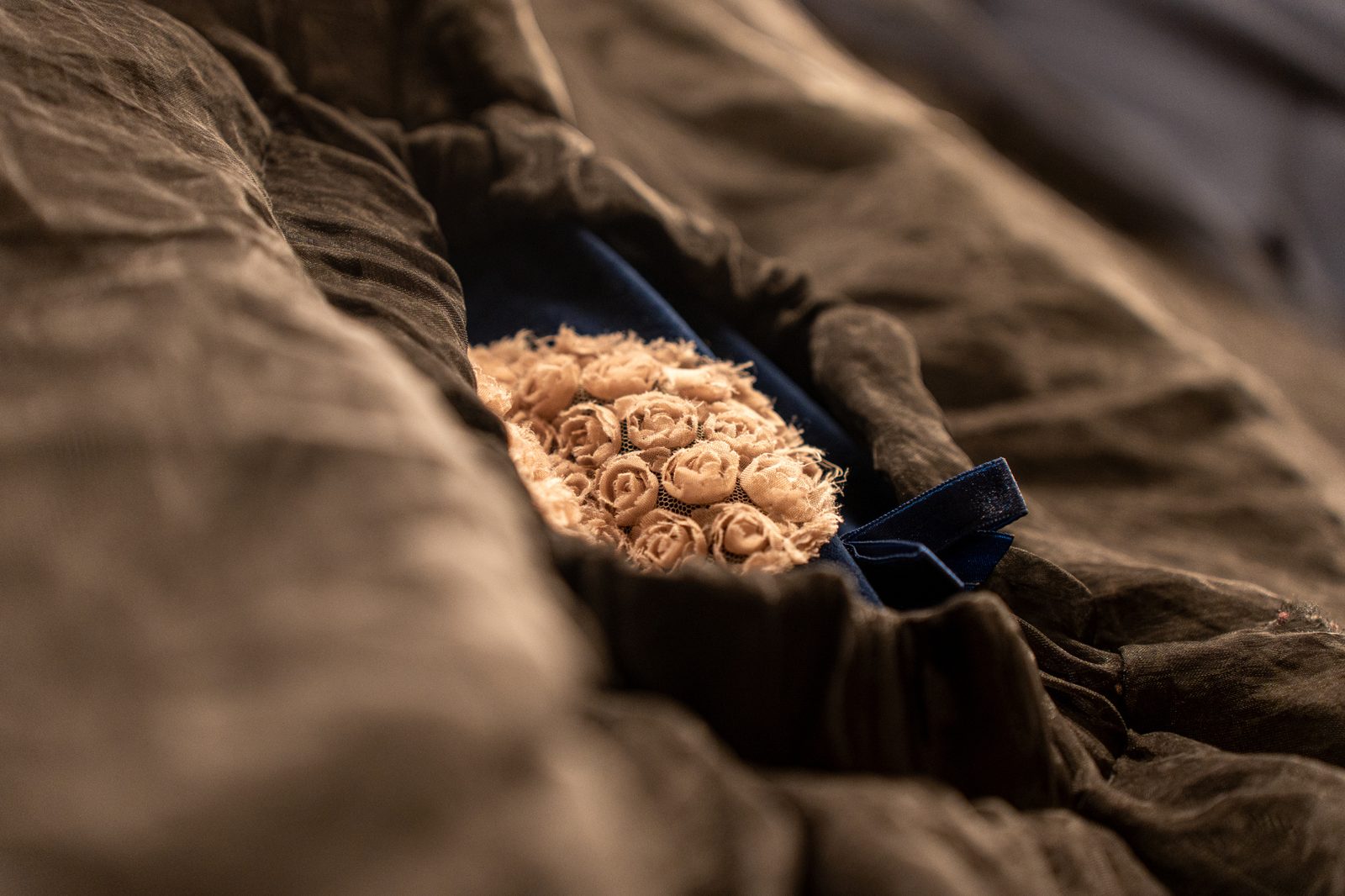
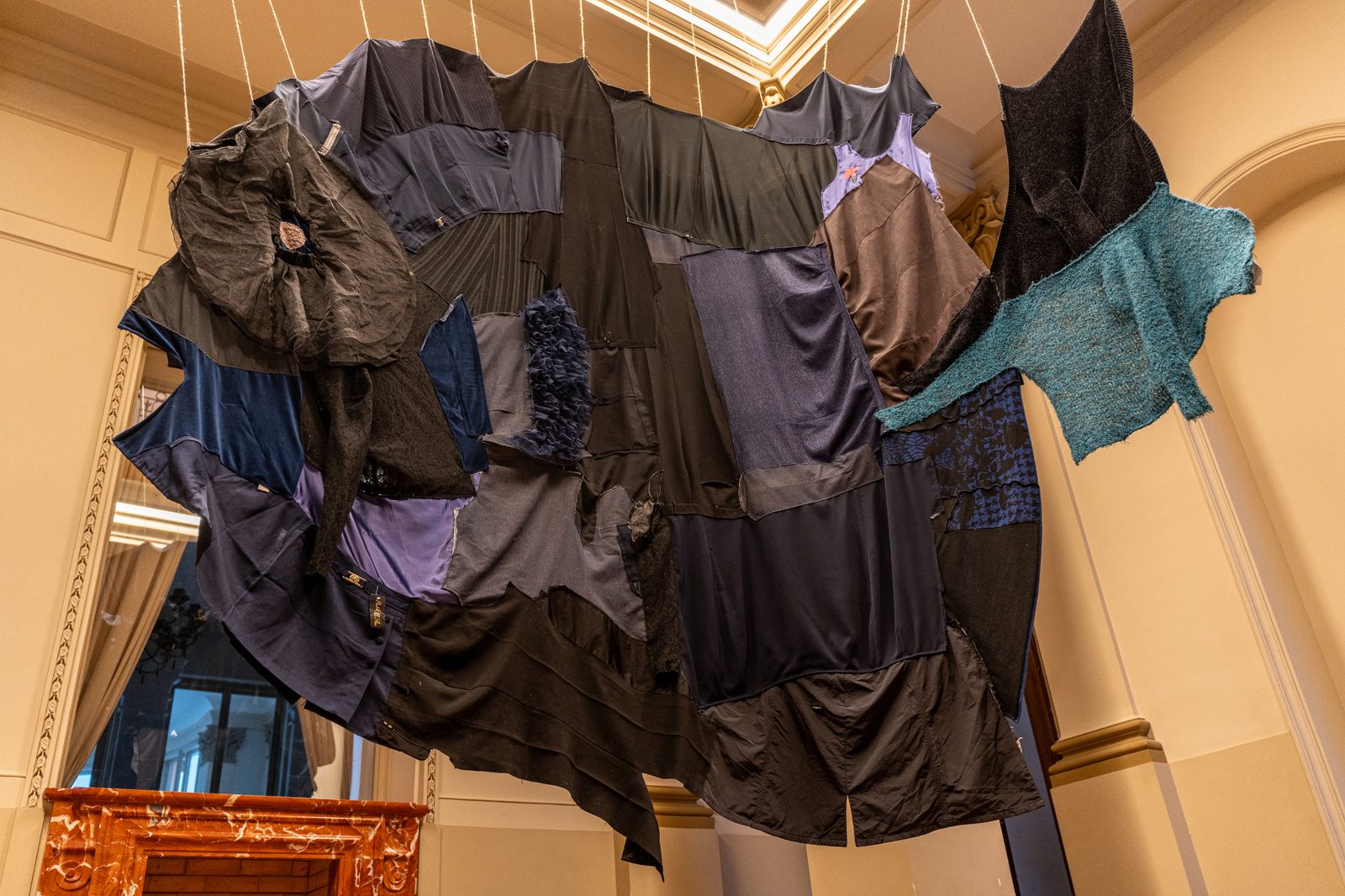
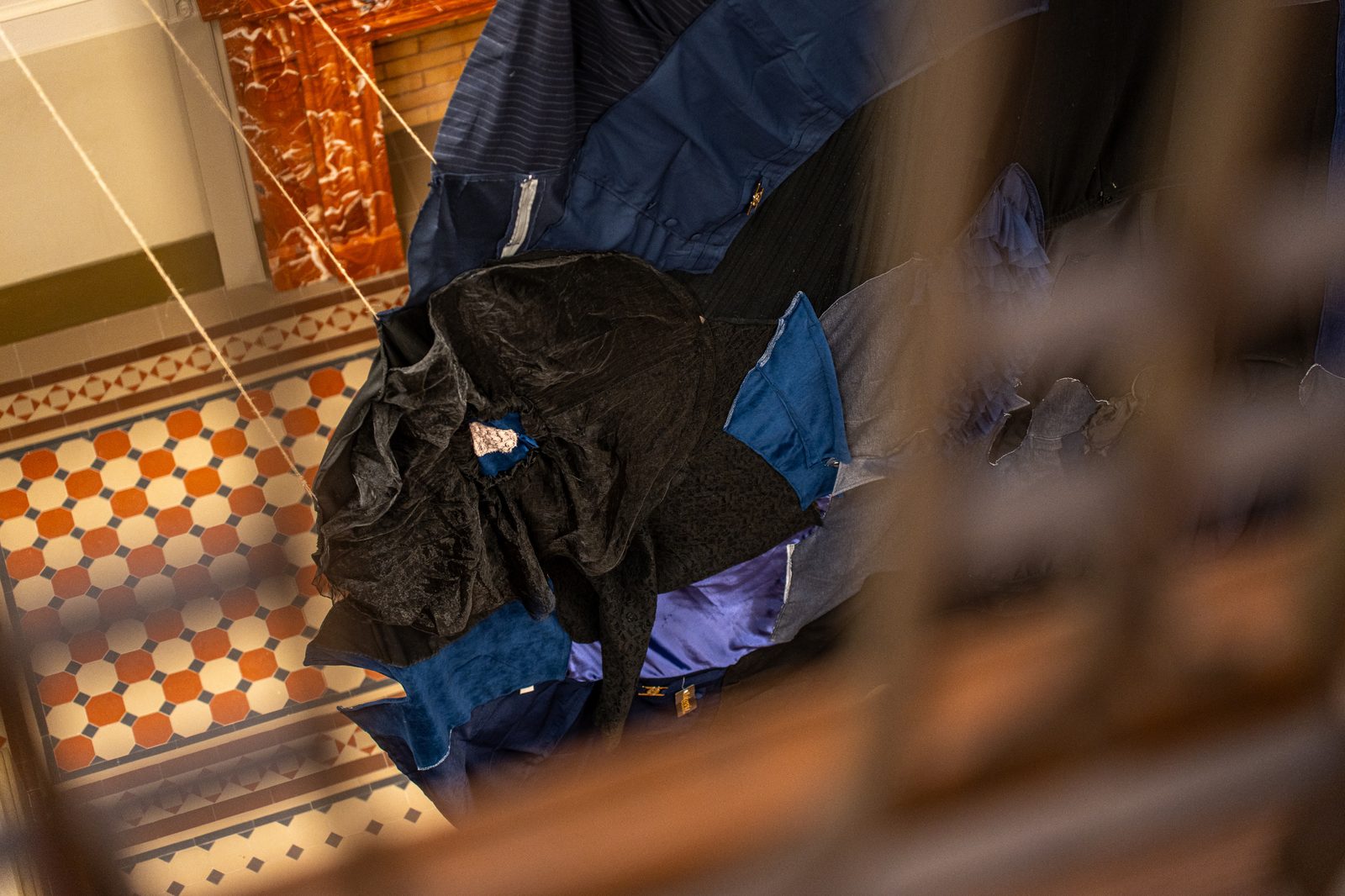
The exhibition centres on a collaborative artwork created with Martyna Plioplytė-Zujienė – a fish-shaped textile sculpture made from worn synthetic garments. The work draws attention to microplastic pollution and the invisible traces that synthetic fibres leave in our oceans.


Second Hand Exhibition - smaller photos